A Toyota bZ4X that won’t start after a night in an inland garage is usually a dead 12V. It’s not an empty traction pack. The dash stays dark. The key fob does nothing. The READY light never shows. That big pack can still hold a charge. The small lead-acid battery just sits too low to wake the computers.
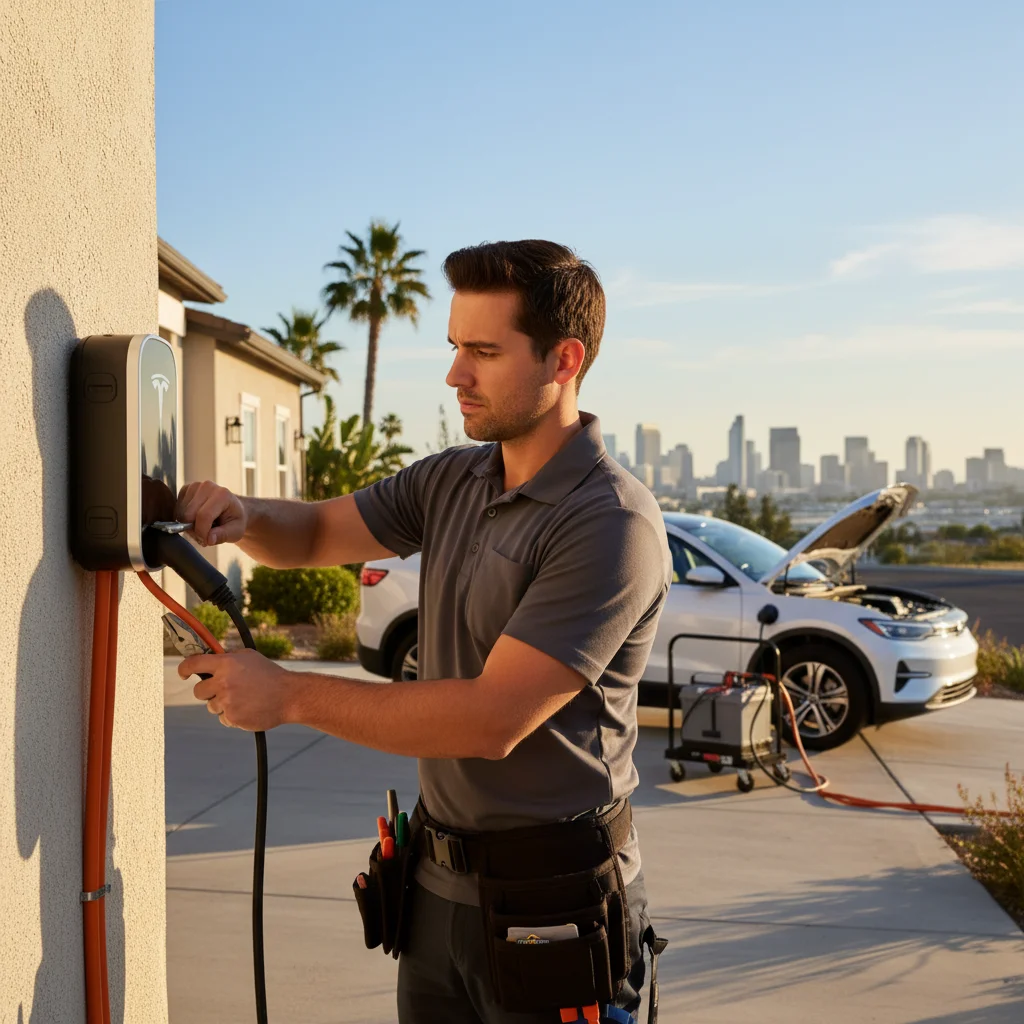
You’ll see that brick in attached garages across Ontario, Riverside, and San Bernardino. You’ll also see it on warehouse rows in Fontana after a night shift. The car was fine at bedtime. In the morning it acts like it has no power at all.
The Subaru Solterra is the same e-TNGA hardware under a different badge. Every check below applies to both.
Dark dash versus a pack that’s actually empty
The bZ4X runs on two batteries with two jobs. The high-voltage pack moves the car. The 12V battery runs locks, lights, and the computers that enable the pack. If that 12V dies, the pack is locked out. Last night’s range readout doesn’t matter.
You’ll find that same chain in when the 12-volt dies, why the EV looks completely dead.
Point at the 12V when you see this:
- Power does nothing. No chime. No glow on the dash.
- The fob won’t unlock. The physical key is the way in.
- Hazard lights stay dark.
- Door locks don’t clunk when you walk up.
A different failure looks busier. The dash lights. A high-voltage warning flashes. Then the car shuts down. Don’t treat that as a simple 12V brick. It needs a dealer scan.
If the cabin is fully dead, start with the 12V.
Why an inland garage overnight is hard on this battery
This failure hits sitting cars more than highway cars. Toyota keeps the 12V topped through a DC-to-DC converter tied to the pack. When the bZ4X is off, that converter is off too. A small drain overnight can drop the 12V under the threshold the computers need to boot.
Inland housing makes a long dark sit ordinary. ACS 2019-2023 figures show 43.8% of San Bernardino County housing was built before 1980. In Riverside County the share is 30.2%. The older valley cities run higher. San Bernardino is 60.9%. Riverside is 56.4%. Ontario is 50.7%. Upland is 55.9%. Montclair is 68.5%. Those attached garages were wired for a door opener and a work light. A 240V EV circuit wasn’t part of the original plan.
The bZ4X often sits powered down after a hot inland afternoon. Lead-acid plates don’t like heat. A closed garage still holds that heat after sunset. A gas car would recover some charge from an alternator after a long crank. This Toyota doesn’t work that way.
Newer streets are a different housing story. Eastvale’s pre-1980 share is 2.2%. French Valley is 2.3%. Temecula is 6.5%. A wall charger in a new garage still doesn’t rescue a weak 12V. The small battery can fail with the car plugged in. House lights can be on. The panel can be fine.
Southern California Edison serves most of the valley. It doesn’t jump a bZ4X. Riverside Public Utilities serves Riverside. The City of Colton Electric Utility serves Colton. Moreno Valley and Rancho Cucamonga are split. SCE covers most of each city. A city utility covers named pockets. None of those agencies wakes a dark Toyota. If the house has power and the car doesn’t, you’re in 12V territory.
The same brick shows up after a shift next to Ontario airport lots and Fontana warehouse rows. Always-on modules keep sipping while the car sits. Morning start fails even after a normal drive home. Check the 12V first. There’s a separate walkthrough for EV rescue around Ontario airport lots and warehouse rows.
First checks before you pull any cables
Work this list in order. Don’t skip straight to a tow.
- Rule out a dead fob battery. Try the physical key in the driver’s door.
- Press Power and watch the dash. Fully dark points at 12V. Partial light is a different path.
- If you have a portable jump pack, use the engine-bay posts below. Don’t hunt under the cargo floor. The bZ4X 12V is in the engine bay.
- If a jump brings READY back, don’t call the job done. The battery took a sip. It still needs a load test, and it may need replacement.
- If READY never appears after a clean jump, stop. That’s dealer-scan territory.
A gas car on the shoulder can supply the 12V jump. The bZ4X posts take standard clamps. You’re not filling the traction pack from that gas car. You’re only waking the low-voltage system.
The clamp order and chassis-ground rule are in how to jump start an electric car without frying the 12V.
Where the posts are, and the sequence that wakes it
The 12V sits under a plastic cover on the driver’s side of the engine bay. Toyota also gives you dedicated jump posts on that same side. You don’t have to pull the cover for a jump.
Positive is a red post under a hinged red cap, toward the front of the bay on the driver’s side. It’s marked with a plus.
Negative isn’t the battery’s own negative post. Clamp the black lead to an unpainted metal bracket or bolt on the structure. That keeps any spark away from the battery.
Do it in this order:
- Keep the donor vehicle or pack off until the clamps are set.
- Red clamp to the bZ4X positive post.
- Other red clamp to the donor positive.
- Black clamp to the donor negative.
- Last black clamp to chassis metal on the bZ4X, not the battery negative.
- Give the computers a couple of minutes to see voltage.
- Foot on the brake. Press Power. Watch for READY.
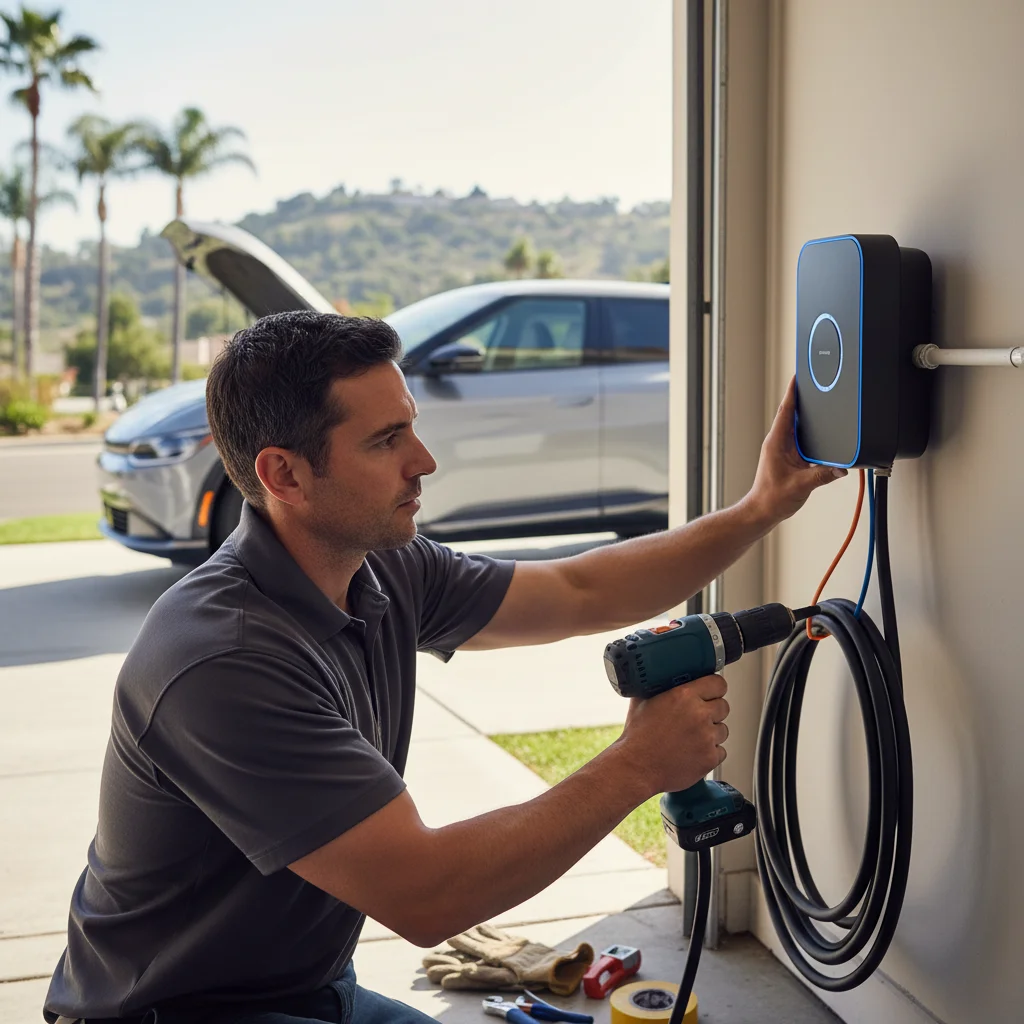
If READY appears and a 12V warning stays on, the battery accepted enough charge to boot. It’s still on the way out. EV 12V battery replacement: signs it’s going, and next steps covers what that visit looks like. Charge Pro IE doesn’t sell the part or set a shop price. An operator or a Toyota dealer handles the battery.
Solterra owners, same morning, same posts
Subaru’s Solterra shares the e-TNGA layout. Battery cover, jump posts, and READY sequence match. Parked in a Rancho Cucamonga garage or a Chino Hills driveway, the steps don’t change. There’s a dedicated walkthrough at Solterra won’t start: begin with the 12-volt battery.
Lexus RZ owners hit a similar dark-cabin brick. The checks differ in the details, so don’t copy this post onto that car.
If you’re already on an inland shoulder
The priority stays the same on the valley freeways. That’s I-10 through Colton. It’s I-215 toward Moreno Valley. It’s the 91 through Corona, and SR-60 in Jurupa Valley. It’s the Cajon climb on I-15 toward Victorville. Jump first if you can do it safely off the travel lane. Don’t nurse a flickering 12V toward a public stall. READY may not hold all the way there.
A DC fast charger won’t fix a 12V that’s too low to close contactors. Plugging in requires the car to wake. That’s the 12V’s job.
If you don’t have cables, or the jump won’t hold, call for a mobile operator. Charge Pro IE is a referral line. It matches stranded drivers with independent local pros. The brand doesn’t own trucks, doesn’t employ technicians, and doesn’t set the price. The operator quotes you before any work starts and bills you directly.
Operators bring jumper gear for the 12V. They can also bring a 240V Level 2 source with a CCS or J1772 adapter if the pack is also low. Native NACS is for Teslas. Your Toyota uses the adapter path. A Level 2 hookup typically adds 10 to 20 miles of range in 15 to 30 minutes of charging. That’s charging time on the car. It isn’t a promise of when someone arrives.
See non-Tesla EV rescue for how that visit is scoped. Heat and grades on inland routes are covered in how to care for an EV battery in Inland Empire heat.
Don’t ask the operator to close a high-voltage fault on the shoulder and call it done. A jump that doesn’t produce READY belongs at a Toyota dealer. A dash warning about the traction system belongs there too.
After READY comes back
Treat the 12V as suspect until it’s tested. A long sit in a Menifee driveway or a Hemet lot can drop it again. If the car dies after a jump, the cell is likely worn out or a drain is still there. That’s replacement and inspection, not another hopeful jump.
Parasitic drain is a shop job. A module that never sleeps can keep sipping. No published local figure was found for how often that hits bZ4X owners in Riverside or San Bernardino County. If a shop can’t show the draw on a meter, keep asking.
High Desert sitting in Hesperia or Adelanto adds heat soak and long off time. A mountain trip toward Lake Arrowhead or Big Bear Lake adds grade once you’re moving. Those are pack and range issues. They don’t change the first 12V checks in the garage.
If the bZ4X is still dark after these steps, call (909) 250-2881. Leave the city, the nearest cross street, and that the car is a Toyota bZ4X with no READY light. The operator quotes before work starts.
Frequently asked questions
How do you jump start a Toyota bZ4X?
Clamp red to the positive post under the hinged red cover on the driver’s side of the engine bay. Clamp black to unpainted chassis metal, not the battery negative. Give the system a couple of minutes. Then press Power with your foot on the brake.
Why won’t the READY light come on?
The 12V auxiliary battery is the usual cause. The bZ4X needs that system to power the computers before the traction pack can engage. Jump the posts first. If READY still never appears after a solid jump, the car may have a high-voltage fault that needs a dealer scan.
Do these checks also work on a Subaru Solterra?
Yes. The Solterra is built on the same e-TNGA platform. It shares the 12V location, the jump posts, and the READY sequence. Follow the same clamp order on both.