A public EV charger not working is a decide-now problem, not a waiting game. On the I-15 Cajon climb toward Victorville, a dead stall burns remaining range. High Desert miles near Adelanto and Hesperia work the same way. Try another cable or stall before you give up on the site. Then confirm a backup in an app before you roll. If that still fails, call for a mobile Level 2 charge. Don’t ask a low pack to gamble on the next maybe.
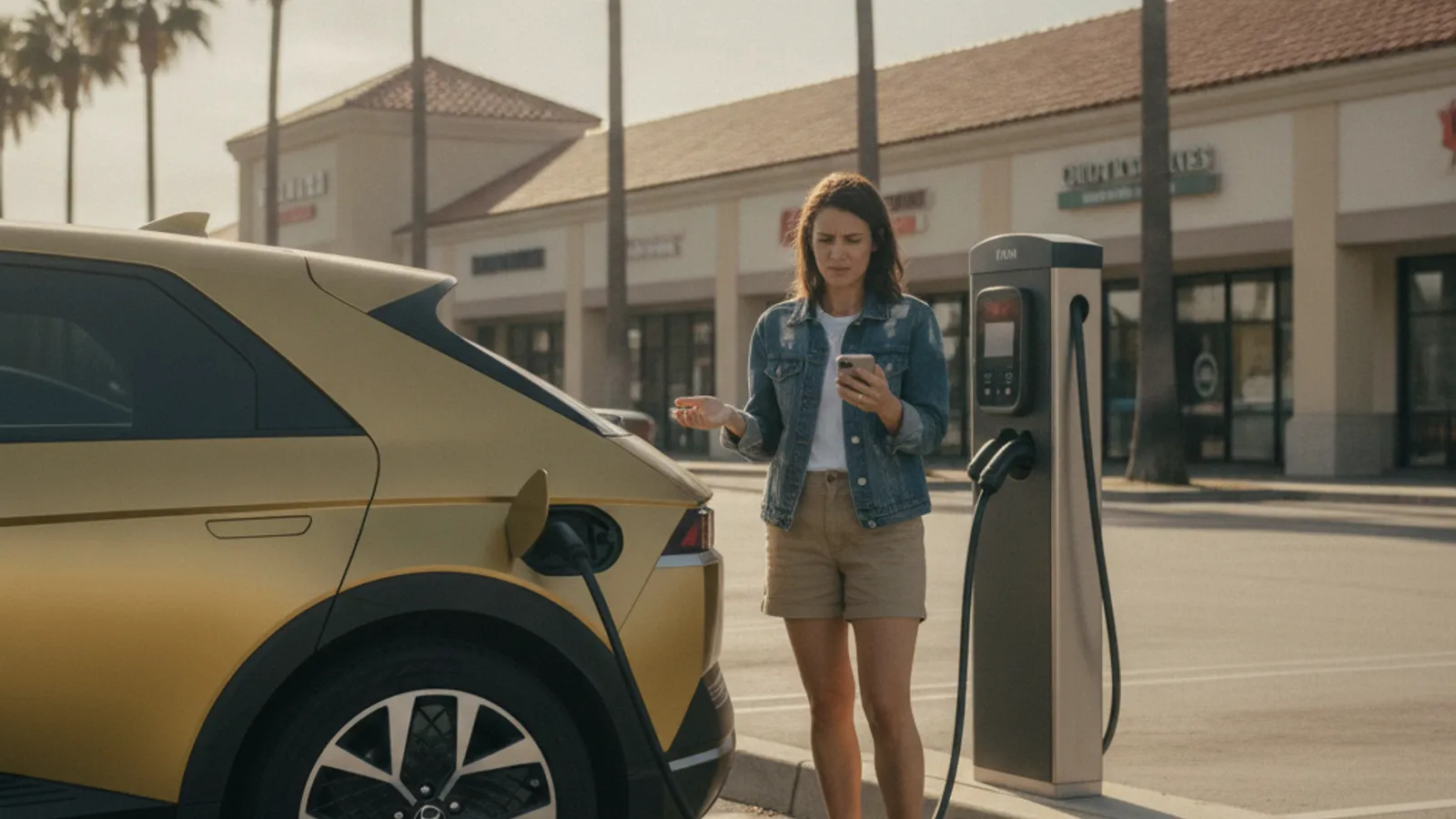
A dead stall isn’t a line you should stand in
Public kiosks fail for reasons that have nothing to do with your car. A connector that didn’t seat will kill a session on its own. A payment handshake that never finished looks the same from the driver’s seat. One cabinet can feed two stalls, with only one of them live. Waiting doesn’t repair a loose handle, a dead cabinet, or a dropped handshake.
Inland roads make that wait expensive, because grades and heat still spend the pack. Grades on I-15 pull energy before you even see Victorville. I-10 through Colton and Redlands runs the valley floor first. Then the same freeway climbs toward Beaumont, Banning, Calimesa, and Cabazon. SR-60 through Jurupa Valley adds heat and traffic on a low pack. I-215 through Moreno Valley and Perris does the same in stop-and-go. SR-91 through Corona stacks traffic on top of a tired pack. The Ortega near Wildomar is a two-lane grade, not a lot puzzle.
Parked air conditioning still draws from the pack. Giving the kiosk extra minutes is how an error becomes a roadside stop. The useful question is whether this stall can start after those checks. If it can’t, you need a different plan.
What not working looks like from the lot
Sometimes the screen is already red before you unclip the handle. Believe that status, because the network already marked the stall unavailable. Don’t spend remaining range proving the app wrong.
Sometimes the cable latches, the lights look friendly, and nothing happens. That’s the connected-but-not-charging mess. Handshake, payment, or a cabinet fault can all wear that face. Work through the checks below, then stop.
Sometimes the charger isn’t the story at all. The car won’t wake, and the dash stays black. That’s often the 12-volt battery, and a new kiosk won’t fix it.
Run the short checks, then quit
Do these in order, and skip any step you’ve already done.
Reseat the cable like you mean it
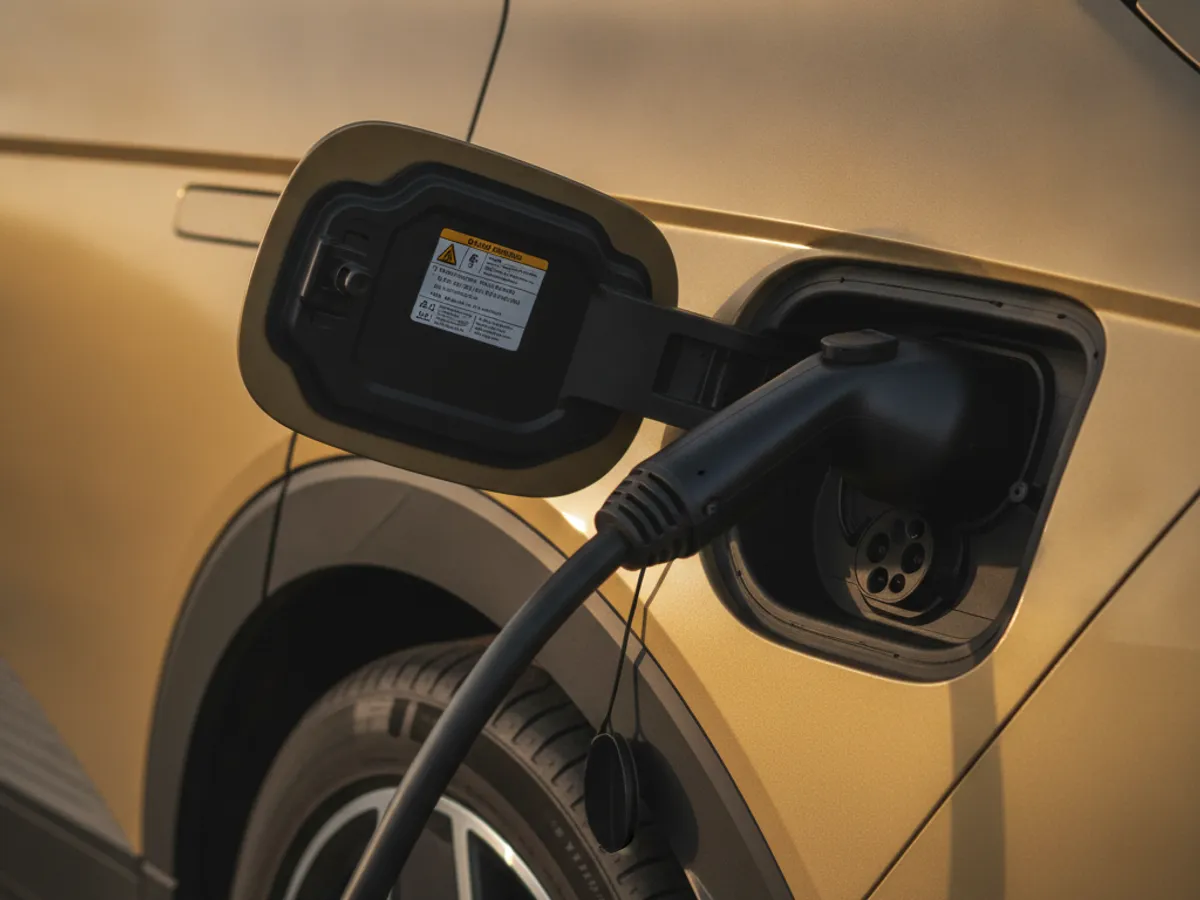
Unplug all the way and look at the connector face. Grit, a bent pin, or a half-latched handle will kill a session. Plug in until it clicks, then hold a beat. A loose seat is still the miss most drivers skip. If you see water in the port, dry it before you plug.
Move one stall over, not across town
DC fast sites often share a power cabinet. Stall three can sit dead while stall four is fine. Take the next open stall before you leave the site. If the second stall fails too, you’ve learned enough. Don’t keep walking the same row after that.
Restart from the phone, not the kiosk
ChargePoint, EVgo, and Electrify America authenticate through a phone handshake. The screen can look busy while a session never actually starts. Force-close the app, then open it again. Start from your phone, not from repeated taps on the cabinet. If the stall already shows unavailable in that network’s app, trust the status. You’re not going to argue it into working. See Public charger says connected but not charging? Try this next.
Treat payment as part of the hardware test
A declined card looks exactly like a broken charger. Try the RFID fob if you carry one. Switch to another card in the app. If payment clears and the stall still sits idle, stop there. The next decision is a confirmed backup or a call.
Pass, desert, mountain, and valley aren’t the same wait
The Inland Empire isn’t one errand with a city name swapped. A dead stall in downtown Riverside runs on a different clock. A dead stall after Cajon is a tighter problem. In town you can sit still, open an app, and confirm a backup. After a climb, the pack is already working harder.
Lake Arrowhead, Crestline, and Running Springs sit above the valley. Big Bear City and Big Bear Lake sit up there too. The climb costs energy on the way up. Coming down still needs a car that’s awake. A kiosk that won’t start up there isn’t a wait-it-out problem.
High Desert cities cover a lot of ground. Victorville, Apple Valley, Hesperia, Adelanto, and Phelan are large places with long local drives. Heat is the common thread on those miles. A failed stall in that heat is a bad time to tour lots.
Warehouse rows in Fontana and Ontario produce the same scene. So do airport lots around Ontario, and destination lots in Cabazon. You parked because the map said this stall was the plan. Your job isn’t to become the site’s unpaid technician.
Temecula and Murrieta drivers hit this on wine-country miles after a long day. Menifee and Wildomar drivers hit it when a stall fails before the Ortega. Corona drivers hit it on the 91. San Bernardino and Highland sit at the foot of mountain climbs. None of those trips wait well at a kiosk that’s already thrown an error.
Superchargers and public networks aren’t built the same way
Tesla builds and maintains Superchargers as one system. ChargePoint, EVgo, and Electrify America often split the job. A property owner may own the hardware. The network may only run software and billing. When a stall breaks, two companies can each wait on the other. That split is why an error screen can linger. It isn’t a failure rate, and it isn’t a ranking. It’s why a shopping-center kiosk can stay red while you sit there.
A DC fast charger also needs a live data link to start billing. If that link drops, a mechanically fine stall still won’t start. That’s software wearing a hardware mask. It’s why an app restart comes before you assume the cabinet is scrap.
If the stalls in question are Tesla stalls in Calimesa, start with live status. When the Calimesa Tesla stalls are packed or offline is that specific case.
Confirm the next plug before you spend the miles
Chasing a rumor of a working charger is how people end up on a shoulder. Search while the car is parked and safe. Use a recent-check-in app, not only the in-car map. PlugShare is built around driver reports. A stall that’s been red all afternoon often shows there first.
Before you leave a dead stall, pin a backup someone recently used. If the notes say that site is down, pick another pin. Build that habit with EV charging apps to check before you strand on empty miles. Only then should you leave the lot. If the next pin is itself a maybe, you’re gambling, not navigating.
A low pack on I-15 after Cajon is a known local bind. Out of charge on I-15 at the Cajon climb toward Victorville walks that stretch. Out of charge on empty High Desert miles near Adelanto covers that run. Don’t treat a sliver of estimated arrival range as a plan. Traffic on the 91 eats the cushion your estimate assumed. A grade on I-10 and summer heat do the same. Sit, confirm the next plug, then move the car.
Make sure it isn’t the 12-volt, or a stuck port
A public charger that won’t start is usually the stall or the network. Your car can still be the reason it looks that way. If the dash is dark or the car won’t wake, think 12-volt first. Teslas have a 12-volt battery, like other EVs. So do Rivian, Ford, Hyundai, Kia, Chevy, and the other major brands. A dead 12-volt can block charging even when the traction pack still has energy. A new kiosk won’t wake that car. A jump or a replacement on site might.
If the car charges at home, this stall is the likely fault. The same is true if it charges at other public sites. A true vehicle-side charging error tends to show on your own screen. Note the kiosk text and the dash text. A stuck charge-port latch is another fake charger-down moment. The cable won’t release, or the door won’t open. That’s a car procedure, not a network outage.
When a mobile Level 2 visit is the better call
Call for a mobile charge instead of hunting when any of these is true. You’ve already tried two stalls, or two networks, at this site. Your remaining range is too tight to spend on an unconfirmed pin. You’re on a Cajon climb or a High Desert run with a tight pack.
That’s the gap mobile EV charging is meant to fill. Charge Pro IE is a referral line. It matches stranded drivers with independent local operators. It doesn’t own trucks or employ technicians. The operator quotes you before starting, then bills you directly.
What the operator brings is a 240-volt Level 2 source to the car. Tesla drivers get a native NACS plug. Other EVs use a CCS or J1772 adapter. A typical session adds about 10 to 20 miles of range. That takes 15 to 30 minutes of charging. That’s charging time, not an arrival time.
They can also jump or replace a dead 12-volt on site. They handle Tesla and every major EV brand. You stay put at the dead stall or a safe shoulder. Read What a mobile EV charging visit actually is, and isn’t for the limits. A tow still has a place if the car has a mechanical fault. Don’t order a hook until you’ve ruled out a mobile charge.
Call before the pack decides for you
A broken public charger isn’t your fault. It also isn’t a reason to wait until you’re stuck. Reseat the cable, try a neighbor stall, and restart the app. After that, next is a confirmed backup or a call.
Call (909) 250-2881. Charge Pro IE will connect you with a local operator. They can quote a Level 2 rescue where you sit.
Frequently asked questions
Why won’t a public EV charger start a session?
Most of the time it’s a loose connector or a failed app handshake. A payment decline or a single dead stall can look the same. Reseat the cable, then restart the app. If those fail, treat the site as out. Then use a confirmed backup, or call for a mobile Level 2 charge.
Is it the charger or my car?
Usually it’s the charger or the network. If your EV charges at home, this site is the problem. The same is true if other public stalls work. A vehicle-side charging fault tends to show on your dash. A dark car with a silent pack is often the 12-volt, not the kiosk.
When should I stop waiting and call for a mobile charge?
Stop waiting once two stalls or two networks have failed. Stop if your remaining range can’t absorb a miss. On a Cajon climb that line comes sooner. A local operator can bring Level 2 charge to you. They quote before they start any charging.