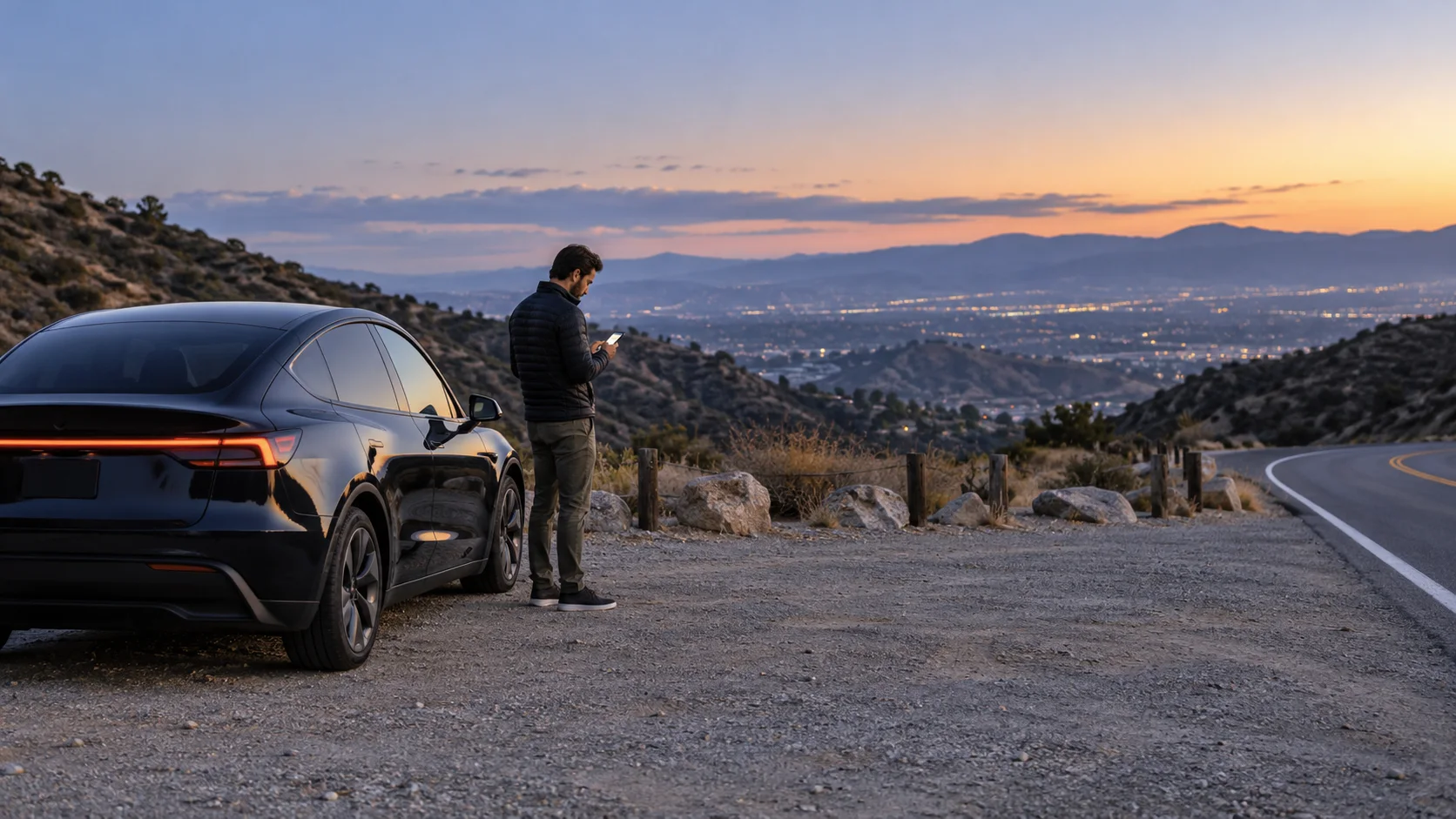
Progressive roadside assistance can help when an EV runs out of charge, but its published answer is a tow, not a promise of charging at the car. Progressive says it can arrange a tow within a 15-mile radius, or to the nearest qualified charging facility if none is within that radius. The member pays for the charge. Your own policy still controls whether roadside coverage applies.
Start with the battery that failed
“Dead EV” can describe two different problems. A depleted high-voltage pack needs energy or a tow to a charger. A discharged low-voltage battery may leave the screens, locks, and start controls unresponsive even when the drive battery still has range.
That distinction changes the roadside request. Ask for a low-voltage jump if the pack was not near empty before the car went dark. Ask about the depleted-EV tow rule if the range reached zero. If the evidence is mixed, describe the last range reading, warnings, screen behavior, and whether the doors still respond. Do not guess that the main pack failed just because the car looks lifeless.
Sort those symptoms before placing a request. The roadside representative needs to know whether the likely task is a jump or a depleted-EV tow.
What Progressive publishes for an electric car
Progressive describes roadside assistance as optional coverage. That means a Progressive auto policy does not automatically establish that the benefit is active. Check the declarations page, app, or policy documents before relying on it.
For an electric car that runs out of charge, Progressive’s current roadside page says it can arrange a tow within a 15-mile radius. If no qualified charging facility is within that radius, its published path is the nearest qualified charging facility. Progressive also says the member pays for the charge.
Read that language carefully. It supports a tow decision. It does not say that every dispatched vehicle carries EV charging equipment. It also does not establish what your individual contract covers in every situation. Policy terms, vehicle condition, location, and the available destination can affect the real next step.
Before authorizing anything, confirm:
- Roadside assistance appears on your current policy.
- Progressive treats the event as a depleted EV, a low-voltage jump, or another breakdown.
- The proposed destination is compatible with your vehicle.
- You understand which charging cost remains yours.
- The tow operator has the correct loading instructions for your exact EV.
Do not rely on a remembered benefit from an older policy period. The current contract is the authority.
Why Inland Empire distance matters
A radius can feel very different on I-10 through Ontario than on a mountain or High Desert route. A driver near a dense commercial area may have several charging destinations nearby. A driver heading toward Wrightwood, Big Bear, Victorville, or a remote stretch beyond the urban core may have fewer practical choices.
The published rule does account for the case where no qualified charging facility sits inside the stated radius. Still, “nearest” does not mean the destination is open, compatible, or able to start a session. While you are safely stopped, verify the connector type and current station status through the vehicle navigation or charging network. Do not leave the vehicle in an unsafe position just to research a charger.
Freeway shoulders add a separate safety decision. If the car is exposed to moving traffic, tell the roadside representative exactly where it sits and follow emergency guidance. A charging or coverage comparison can wait until the scene is safe.
A local mobile charge is a separate path
An independent mobile-charging operator is not a Progressive benefit unless Progressive specifically confirms that arrangement under your policy. It is a separate service. The useful difference is physical: a tow moves the EV to power, while a properly equipped operator may bring a compatible charging source to the EV.
That second path can make sense when the car is otherwise healthy, the pack is simply empty, and the stopping location permits safe charging. It is not right for every scene. Visible crash damage, smoke, unusual heat, leaking fluid, a damaged charge port, or a traffic-exposed position are stop conditions. Use emergency help or a qualified tow instead of connecting equipment.
Charge Pro IE is a referral service. It does not provide the charge, own a truck, set the operator’s price, or bill Progressive. It matches drivers with licensed independent operators, who explain the proposed work, quote it, and bill the driver directly. See how mobile EV charging differs from general EV roadside assistance.
Compare the contract, not the insurer’s name
Roadside programs can sound alike while producing different outcomes for an empty pack. Compare the exact benefit you hold, not a general impression of the carrier.
Our guides to Allstate roadside help for EVs, USAA roadside and a dead EV, and AAA versus mobile charging cover the same decision from other program angles. None can replace the language in your Progressive policy.
A clean decision sequence
First, move away from active traffic if the car can be moved safely. Turn on hazard lights if the low-voltage system still works. Then check the last known range and the car’s current response.
Next, open the current Progressive policy or app. Confirm roadside coverage and report whether this appears to be an empty pack or an unresponsive low-voltage system. Ask for the destination before the tow begins. Confirm that it can charge your vehicle.
If Progressive’s tow path does not fit and the car is safe to approach, a matched local operator may be another option. If the car is damaged, hot, smoking, or in an unsafe lane, stop troubleshooting. Treat the scene as a safety and towing problem.
The practical answer is simple: Progressive publishes a depleted-EV towing path, but your active policy governs. A mobile charge is a separate local service, not something to assume is included.
Frequently asked questions
Does Progressive roadside bring a charger to a dead EV?
Progressive’s published depleted-EV guidance describes arranging a tow. It does not promise that a roadside vehicle will charge the EV where it stopped. Confirm the handling of your request with Progressive under your current policy.
How far will Progressive tow an EV that ran out of charge?
Progressive currently says within a 15-mile radius, or to the nearest qualified charging facility if none is within that radius. Coverage remains policy-controlled, so confirm the destination before the tow.
Does Progressive pay for the electricity at the charger?
Progressive’s roadside page says the member pays for the charge. Ask Progressive about any other cost questions tied to your specific policy before authorizing service.