Hyundai Ioniq 5 charging time is not one number. At home on Level 2, a full charge usually takes hours. At a capable DC fast charger, Hyundai’s published specs tell a different story. They put 10 to 80 percent around 18 minutes in ideal conditions. A roadside visit in the Inland Empire is a third clock. Independent operators bring a 240-volt Level 2 source to the car. That typically adds 10 to 20 miles of range. The charging window is 15 to 30 minutes. That’s charging time, never an arrival time. On the I-15 shoulder toward Victorville, you’re buying miles to roll. You’re not filling the pack.
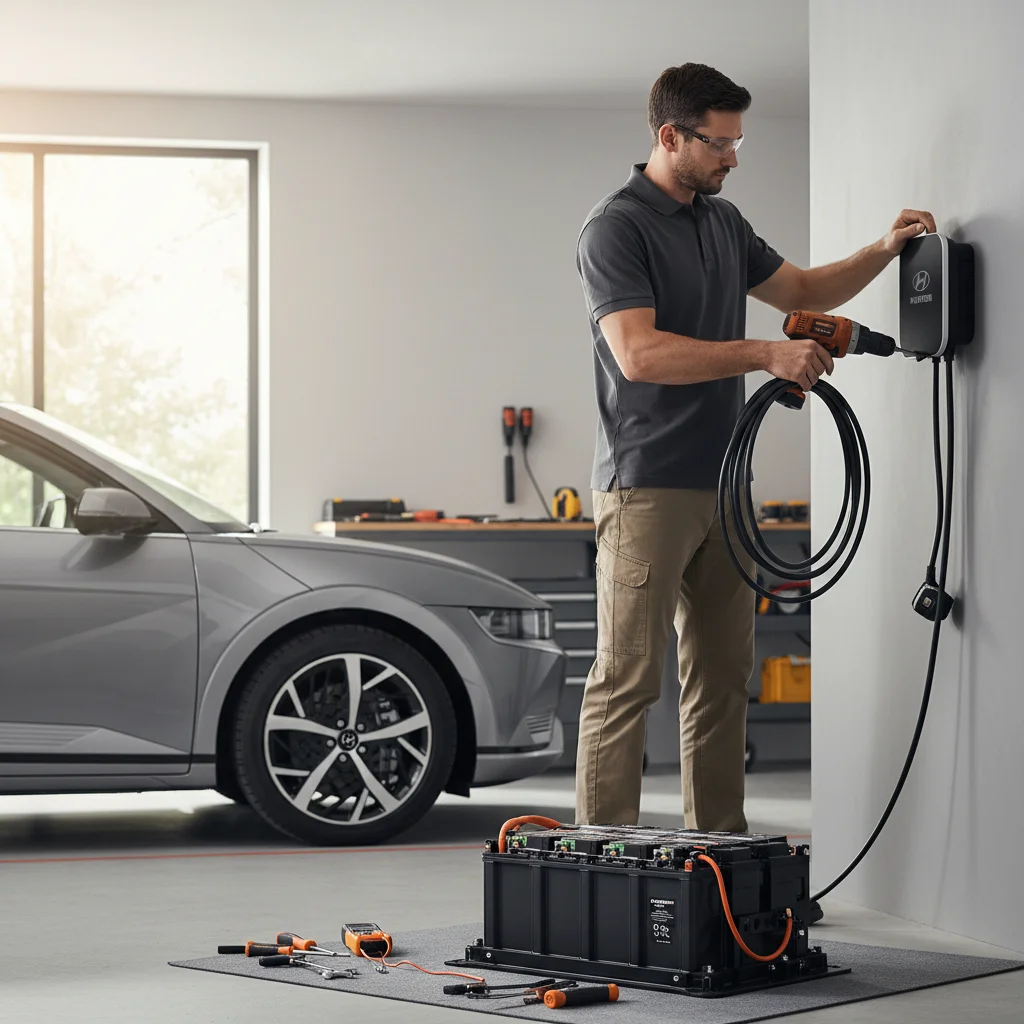
Three clocks for one search
People type “hyundai ioniq 5 charging time” and want a single answer. There isn’t one. You have a home clock, a public DC clock, and a shoulder clock.
The home clock is overnight. Most owners in Riverside County and San Bernardino County finish on a 240-volt wall unit while they sleep. The Standard Range pack commonly takes roughly 5 to 6 hours from empty. The Long Range pack commonly takes roughly 6 to 7 hours. Your starting charge and the wall unit’s output both move that window.
The public DC clock is a trip stop. Hyundai’s 10 to 80 percent figure of around 18 minutes assumes a charger that can feed the car’s peak rate. It also assumes a pack already in a workable temperature window. A busy stall stretches that.
The shoulder clock is a mobile Level 2 hookup. Charge Pro IE is a referral line. We match stranded drivers with independent local operators. We don’t own trucks. We don’t perform the charging. The operator quotes you before starting and bills you directly. What they bring is 240-volt Level 2, with a CCS or J1772 adapter for a non-Tesla like the Ioniq 5. You’re not filling the Long Range pack. You’re buying 10 to 20 miles so you can reach a charger or a driveway.
The split is spelled out in Home 240-volt charging vs a roadside Level 2 hookup.
What 800 volts changes, and what it doesn’t
Most mainstream EVs sit on a 400-volt architecture. The Ioniq 5 is built on 800 volts. That higher voltage is why DC fast charging can look so short on paper. The car can take more power before the pack and cables heat the way a 400-volt design would.
It doesn’t make your garage faster. A Level 2 home charger feeds AC at a fixed rate. The onboard charger sets the pace, not the 800-volt bus. Home times therefore look a lot like other EVs with similar pack sizes.
Pack sizes behind those hour counts live in Hyundai Ioniq 5 battery size, and what that means when you’re low.
Home charging in Riverside and San Bernardino counties
A 120-volt outlet, Level 1, will feed an Ioniq 5. It won’t cover a workday. A full charge from empty can run more than a day. That’s on a regular wall outlet. Most owners treat Level 1 as a backup.
Level 2 is the daily plan. That means a dedicated 240-volt circuit and a wall unit. You plug in after dinner in Ontario or Temecula. You leave with a full pack.
Who sells the power still matters at home. Southern California Edison serves most of both counties, including Fontana, Corona, and Hesperia. Riverside Public Utilities serves the City of Riverside. Colton Electric Utility owns the system inside Colton. The City of Banning Electric Utility serves Banning. Bear Valley Electric Service covers Big Bear Lake and Big Bear City. Moreno Valley and Rancho Cucamonga are split. SCE covers much of each city. A municipal utility covers pockets of newer development. Apple Valley Choice Energy and San Jacinto Power procure generation on top of SCE delivery. Confirm your provider before you pick a home EV rate. SCE publishes TOU-D-PRIME for residential EV charging. Riverside Public Utilities publishes an Electric Vehicle Rate. Plans change. Check the current tariff with the utility that actually bills you.
Panel age can stall a Level 2 install before the car ever plugs in. ACS 2019-2023 figures put pre-1980 housing at 43.8% in San Bernardino County and 30.2% in Riverside County. City shares are higher in San Bernardino at 60.9%, Redlands at 60.4%, Riverside at 56.4%, and Upland at 55.9%. Temecula sits at 6.5%, Eastvale at 2.2%, and French Valley at 2.3%. An older panel may need an electrician’s look first. That’s a licensed electrician’s project. Charge Pro IE doesn’t install chargers. For local charging context by city, start at EV charging in the Inland Empire.
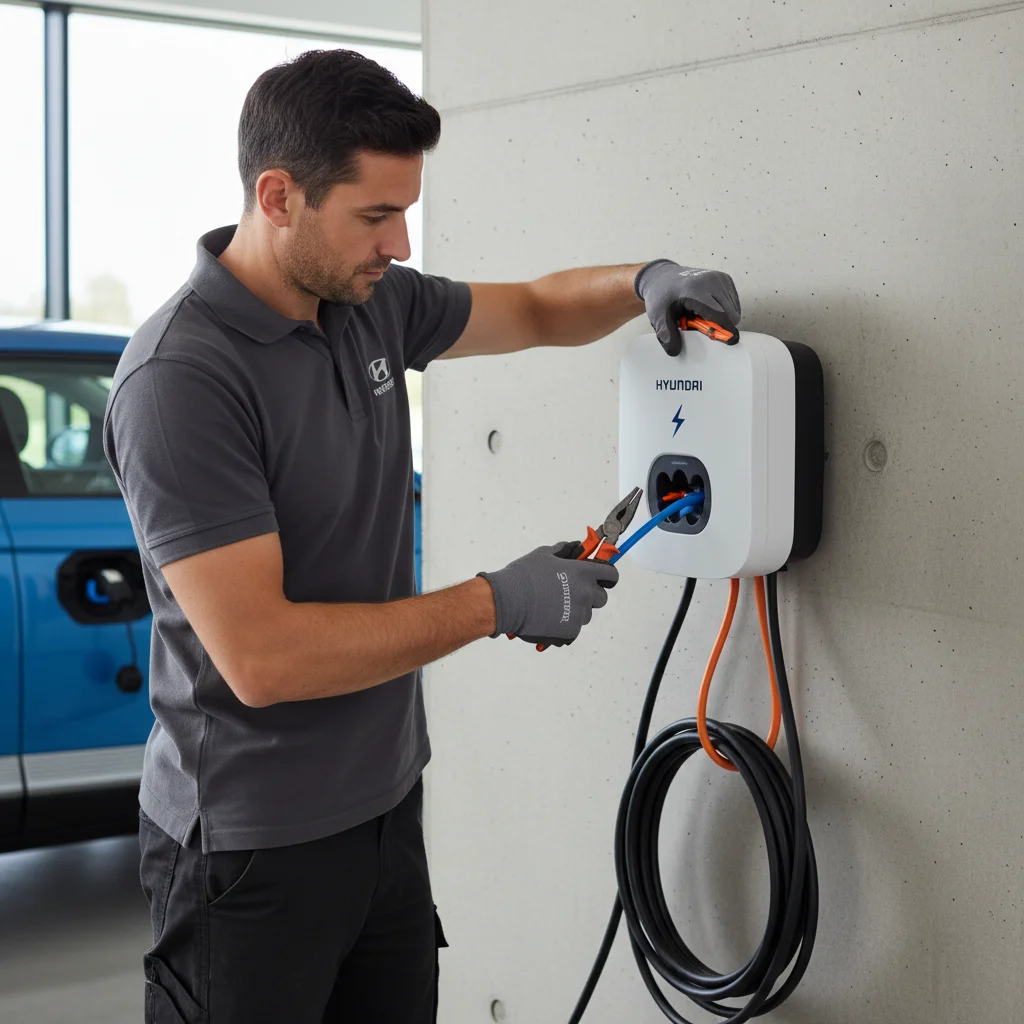
Fast charging on inland freeways
Hyundai’s 18-minute 10 to 80 percent number is a published spec. It isn’t a promise from a random stall. On I-10 through Colton and Redlands, a stall may deliver less than the car can take. The same is true on I-215 through Moreno Valley and Perris. The Ioniq 5 still tapers as it climbs toward full. The last 20 percent can take nearly as long as the first 80. Stopping around 80 percent is the usual road-trip habit.
The connector is part of the clock. The Ioniq 5 ships with CCS. Adapters exist for NACS stalls. Speed through an adapter can vary by model year and by the stall. Confirm what your year supports before you count on a specific plug.
Grades change how far that session actually carries you. The Cajon climb on I-15 toward Victorville and Hesperia burns range on the way up. The Yucaipa and Beaumont stretches on I-10 do the same. A 10 to 80 stop can feel generous in the valley. It can feel tight after a grade. That’s range, not charging speed. Local drivers still plan the stop before the hill.
A cold pack accepts DC power more slowly. That’s a bigger factor at elevation than in the valley. Big Bear Lake, Lake Arrowhead, and Wrightwood sit in that colder pattern. Hyundai doesn’t publish a separate Inland Empire figure for it. Watch the car’s charging graph, not a brochure.
When you’re already on the shoulder
If the pack is empty, overnight math doesn’t help. A warehouse shift in Fontana can leave an Ioniq 5 sitting for hours. So can a commute that dies on the 91 through Corona. A mobile operator’s Level 2 visit is meant to add 10 to 20 miles. That takes 15 to 30 minutes of charging. That’s enough to reach a public stall or a driveway. It isn’t a full Long Range charge.
The Ioniq 5 is a CCS car. Operators who help non-Tesla EVs show up with CCS or J1772 adapters. What that visit is, and isn’t, is in What a mobile EV charging visit actually is, and isn’t. The referral path is our non-Tesla EV rescue page.
We’re a referral line for the Inland Empire. Independent operators do the work. They quote before they start. They bill you directly. We don’t set prices. We don’t promise when someone arrives.
If the 12-volt is the real problem, charging the traction pack won’t wake the car. Run Hyundai Ioniq 5 won’t start: what to check before you call first.
When the session isn’t moving at all
A slow charge and a dead session are different problems. If the cable won’t release, that’s a known Ioniq 5 snag. Use Hyundai Ioniq 5 charge port stuck: how to free a frozen cable. If the car refuses the stall, treat it as a fault. If it won’t start after you unplug, do the same. It isn’t a time problem.
A stall that says connected but never delivers power is a stall problem. Don’t sit there waiting it out if the car still has enough range to move. If it doesn’t, a mobile Level 2 visit is the other path.
If you need a local operator, call (909) 250-2881. We’ll connect you with someone who can quote a Level 2 visit. That’s a referral, not a dispatch clock.
Frequently asked questions
How long does a Hyundai Ioniq 5 take to charge at home?
On Level 2, a full charge commonly takes roughly 5 to 6 hours for Standard Range. Long Range commonly takes roughly 6 to 7 hours. Starting charge and wall-unit output both change that window.
How fast is Ioniq 5 DC fast charging?
Hyundai’s published specs list about 18 minutes for 10 to 80 percent under ideal conditions. That assumes a charger that can match the car’s peak rate. Real stalls often run longer.
Does a roadside charge fill an Ioniq 5?
No. A mobile Level 2 visit here typically adds 10 to 20 miles in 15 to 30 minutes of charging. That’s enough to roll to a charger or home, not a full pack.