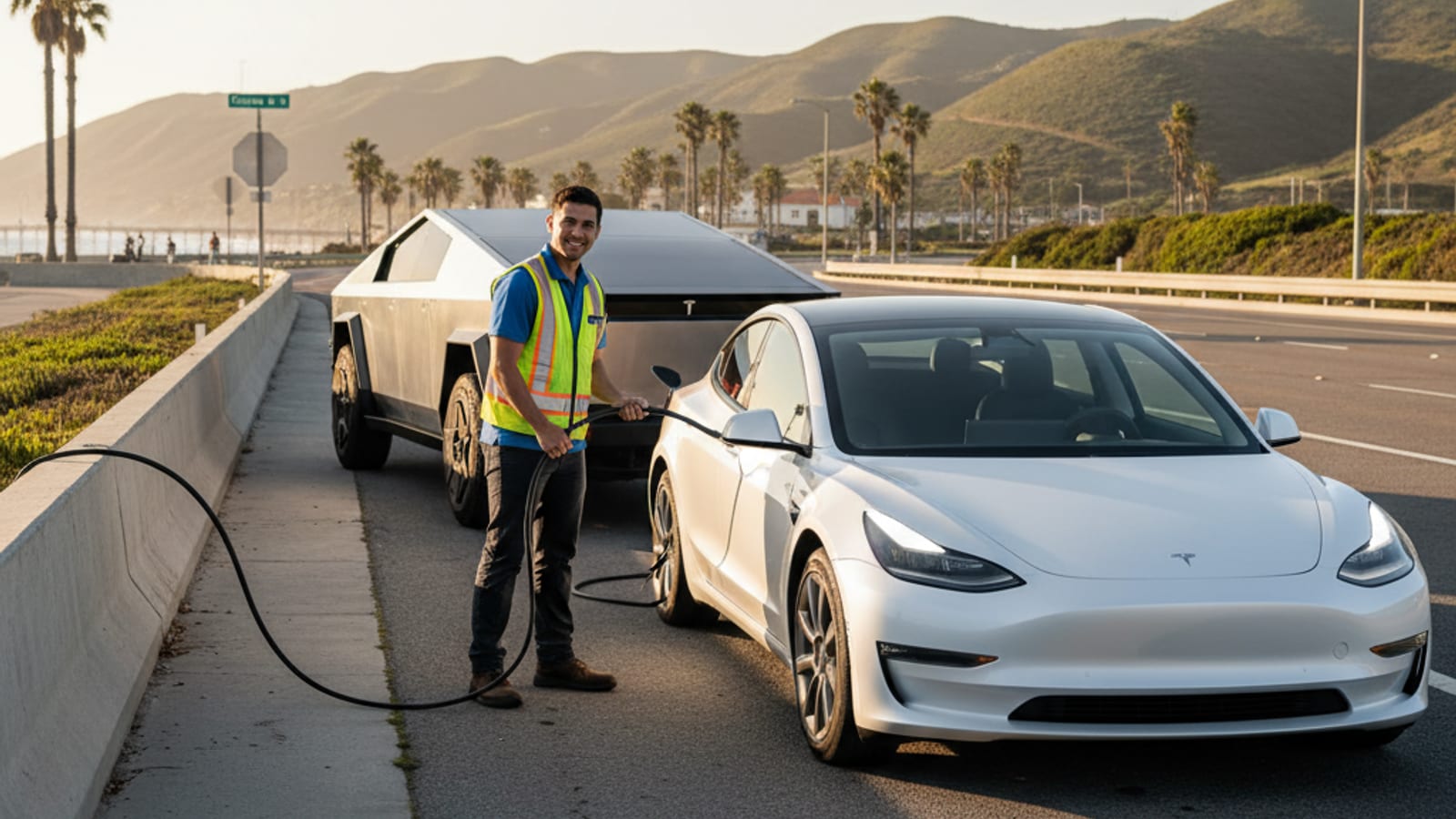
Getting up to Big Bear City is rarely the hard part. The hard part is having enough charge left to get back down. You might be empty on Big Bear Boulevard or Baldwin Lane. EV roadside assistance here means an independent operator comes to you. They add enough range to start the descent. Or they jump a 12V that died in the cold.
Big Bear City is not Big Bear Lake
Outsiders mix these two names up every time. Big Bear Lake is the incorporated city on the west end. It has about 5,000 residents and a little over six square miles. Big Bear City is unincorporated San Bernardino County land. It’s a census-designated place, not a city. About 11,400 people live across 32 square miles. The one called City is not a city. The one called Lake is. More of the valley’s year-round households live on this eastern side. That’s Sugarloaf, Erwin Lake, Baldwin Lake, and the airport area. The Holcomb Valley historic mining area sits on this same east end of the valley.
Tell the operator you’re in Big Bear City. Use ZIP 92314 or 92386, not the lake. Bear Valley Electric Service lists Big Bear City, Sugarloaf, Erwin Lake, and Lake Williams.
The descent is what empties the pack
The climb on SR-18 or SR-38 uses energy. Cabin heat, snow settings, and alpine cold all pull from the pack. The eastern end around Baldwin Lake runs colder and drier than the west shore. A car that looked fine at the cabin can look thin on Greenway Drive. North Shore Drive can feel the same after a night in the cold.
There’s a second trap locals know and visitors don’t. When western routes are chain-controlled or closed, some drivers take SR-18 east. That road heads north toward Lucerne Valley and the Mojave. It’s the wrong road on a low battery. Stay in the valley and get range added before you pick a way down. Angelus Oaks is a neighbor on the way out of the valley. The same pattern shows up after a Lake Arrowhead day trip. The downhill is the risk, not the arrival.
Older cabins, cold mornings, and a dead 12V
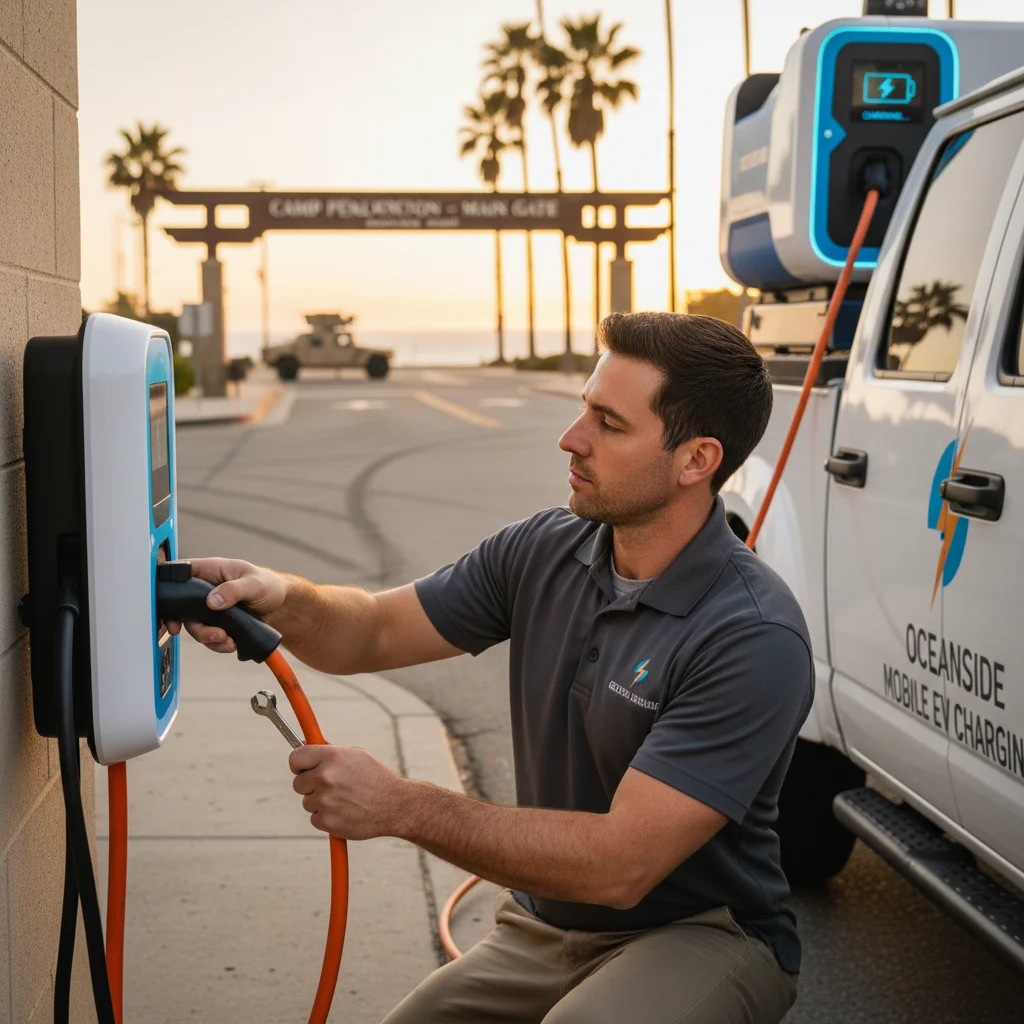
Over half the housing here went up before 1980. That’s ACS 2019-2023 data for this place. Year-round homes on larger lots sit through alpine cold. A pack with miles left still won’t wake if the 12-volt is tired. The dash stays dark, and the doors may not release. It looks like a dead EV when it isn’t. The operators we connect you with can jump or replace that 12V on site. They can also tell you if the high-voltage pack is actually empty. Cold nights in Sugarloaf or by the airport make that failure more likely.
What a mobile visit actually does
Charge Pro IE doesn’t own trucks and doesn’t do the work. We match you with a local mobile rescue operator. That operator quotes you before they start, and they bill you directly. They bring a 240V Level 2 source to the car. Tesla owners get a native NACS plug. Other EVs use a CCS or J1772 adapter. A typical session adds 10 to 20 miles of range. That takes 15 to 30 minutes of charging. That’s plug time, not a promise of when someone arrives. Ten to twenty miles can be enough to leave the east valley. Read how a mobile EV charging rescue works for the full visit. If you’re in the incorporated city next door, use the Big Bear Lake roadside page.
If you’re already stuck
Stay with the car if it’s safe. Set your location as Big Bear City, not the lake. Note the airport, Baldwin Lake, Erwin Lake, or SR-38 toward Onyx Summit. Say if the dash is dark, or if the pack simply hit empty. Out-of-charge recovery is the empty-pack call. See our Big Bear City charging page for the east valley. If you stalled at the Running Springs junction, that’s a different corridor.
Call (909) 250-2881 when you need a match. The operator sets the price and the plan before any cable goes in.