When EV charging stopped at a random percentage, it’s rarely a forgotten setting. The pack got too warm, or the stall’s power sagged. A charge limit always lands on the same number. A wandering stop doesn’t. One session dies at 38 percent in Ontario. The next dies at 61 percent in Moreno Valley. On a hot Inland Empire stall, you still leave short of the miles you planned.
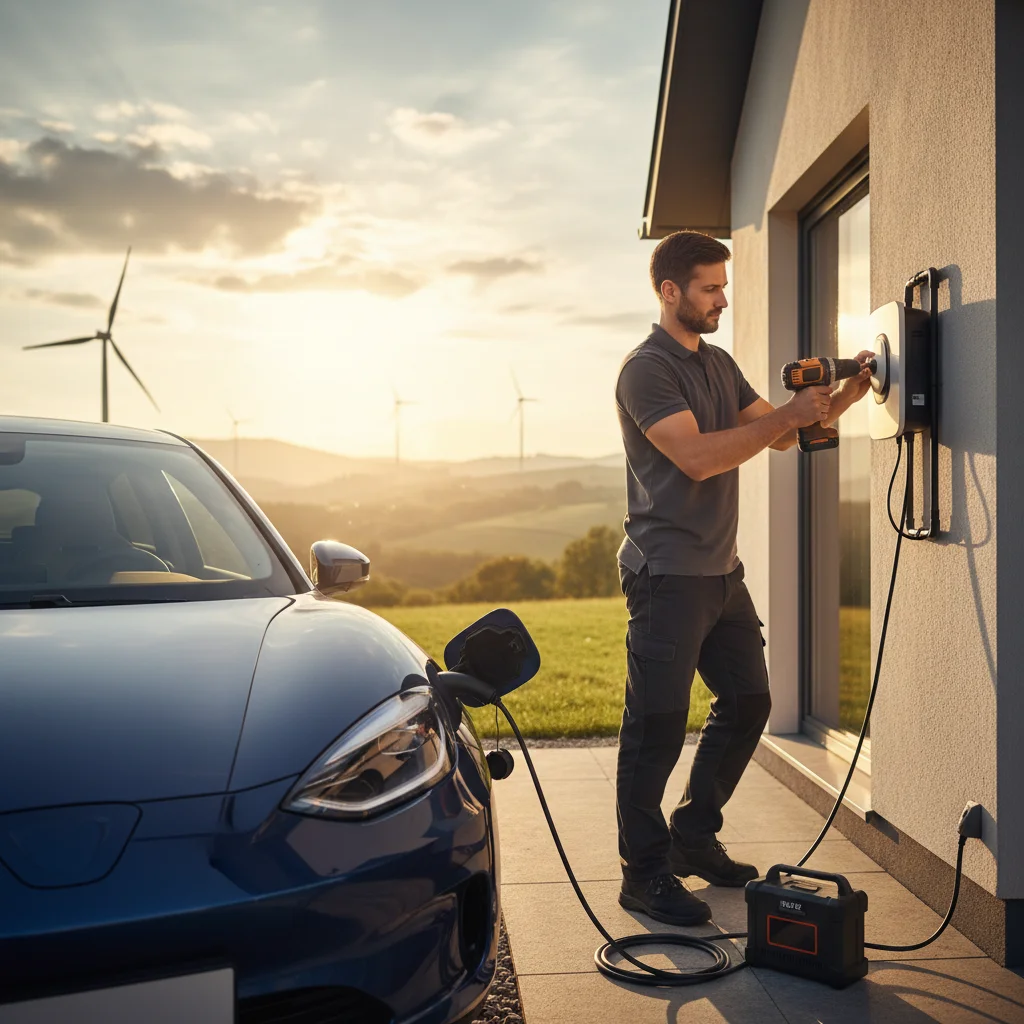
Same number every session, or a new one
Open the app or the center screen before you hunt a fault. Most EVs let you cap daily charging below a full pack. Owners do that to keep the battery happier over years. If the session always ends on that cap, the car is obeying you. That’s not random. A random stop jumps around. It has no tie to the number you picked.
Jot the percent, the stall type, and the time of day. Same public fast stall after a hot highway run is one story. Cool morning on a home plug, still a random cut, is another.
The cutoff is a temperature rule, not a percent
Every EV runs a battery management system while it charges. That system watches pack temperature, not the number on your dash. Charging adds heat on top of a sun-soaked cabin and a hot lot. When the pack climbs past the car’s safe band, the system slows the rate first. If heat keeps rising, it can pause the session until the pack sheds some of that load.
You never see that threshold as a charge target. You only see the session die. A pack already warm from I-10 through Colton hits the pause at one state of charge. A pack that sat in a garage overnight hits it at another. Same car. Different starting heat. Different percent when it quits.
That’s why it feels like a glitch. It’s not a new limit. It’s a temperature rule you can’t set. How to care for an EV battery in Inland Empire heat is the longer version of this climate.
Heat here depends on where you just drove
The Inland Empire isn’t one climate. A Fontana warehouse row soaks a parked EV after a delivery loop. The I-15 climb toward Victorville loads the pack on the Cajon grade. Then you plug in on the High Desert. Temecula wine-country miles and a Corona run on the 91 are different soaks again. I-215 through Moreno Valley and Perris can bake a pack in traffic. So can SR-60 through Jurupa Valley, before you ever reach a stall.
Mountain towns sit in another band. Big Bear Lake power comes from Bear Valley Electric Service. Lake Arrowhead and Crestline sit on Southern California Edison. A pack that worked the descent is still managing heat at the bottom, in Highland or Yucaipa. Beaumont, Banning, Calimesa, and Cabazon sit on the I-10 climb. The car has already been working when you plug in.
Sun, then a DC fast stall, is the combo that triggers a thermal pause most often. Shade, a garage, or a rest after the drive gives the pack a chance to settle. You can’t force a full session through a hot pack.
When the stall drops you, not the car
Random stops that show up only on public DC fast stalls often point at the cabinet. Fast stalls share power. On a busy afternoon the stall may derate, then drop the session. The car looks like it quit at a random percent. The cabinet simply ran out of headroom.
Try a Level 2 post on the same lot if one is open. If that session completes, your pack and onboard charger are probably fine. The fast stall was the weak link. Our notes on a public charger that says connected but won’t charge cover a close cousin of this stall. Don’t wait through a dead session hoping the percent will jump. If it’s not climbing, change the plan. Treat it as a stall problem, not a new charge limit.
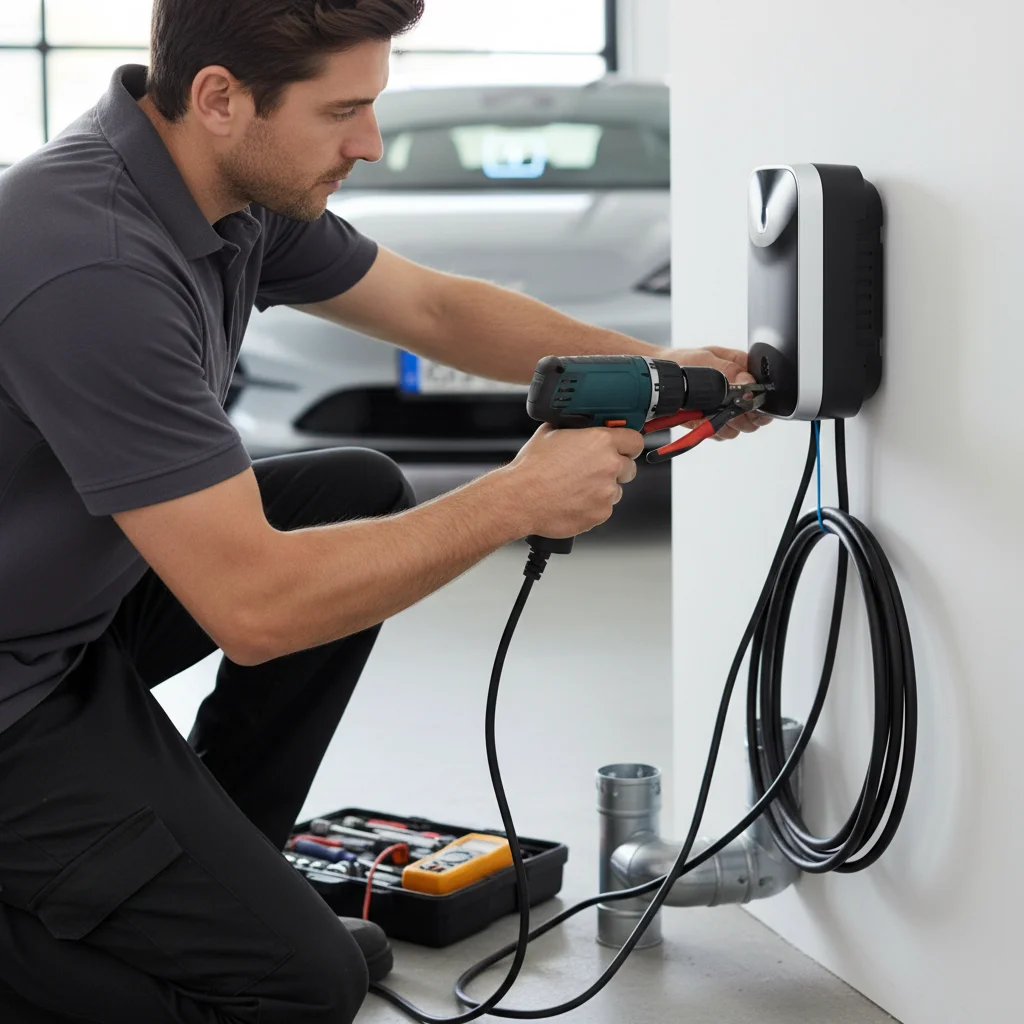
A home charge that finishes is your control
Use overnight charging as a test, not a guess. If Level 2 at home completes, and only the public fast stall dies mid-session, start with heat and the cabinet. The car has already proven it can finish a charge when the pack is cooler and the power is steady.
Whose meter you sit on at home depends on the city. Riverside Public Utilities serves the city of Riverside. Corona, next door, is Southern California Edison. Moreno Valley is split. SCE serves part of town, and Moreno Valley Utility covers newer tracts. Rancho Cucamonga is split too. Rancho Cucamonga Municipal Utility covers a southeast pocket around Victoria Gardens and The Enclave. Colton owns its electric system inside city limits. Banning runs a municipal utility.
Older housing can muddy the home test. ACS 2019-2023 figures put pre-1980 housing at 50.7 percent in Ontario and 56.4 percent in the city of Riverside. San Bernardino sits at 60.9 percent. Eastvale sits at 2.2 percent. If an older panel trips, that’s a breaker problem, not a random public stop.
Cool mornings, and the stop still wanders
If charging dies on cool mornings too, heat is a weak explanation. A weak 12V can drop the charging computer mid-session. The percent looks random. The real issue is the small battery, not the traction pack. When an EV 12V battery dies on the road walks through that mix-up.
A true battery-management fault or a failing onboard charger can do this too. Those need a shop, not another stall. Charge Pro IE doesn’t repair those systems. We match you with a local operator if you need enough charge to roll.
The session died, and you’re still short
A paused charge still leaves a gap. You planned on more miles than the stall gave you. Stretch what you have first. Ease off the speed. Cut extra cabin load if you can do it safely. Our checklist for an EV running low is for that window.
If the car won’t take a proper charge in time, a mobile visit is the other path. Charge Pro IE is a referral line. We match stranded drivers with independent local operators. The pros we connect you with are licensed and insured. They bring a 240V Level 2 source to the car. They use a native NACS plug, or a CCS or J1772 adapter for non-Tesla EVs. A typical roadside charge adds 10 to 20 miles of range in 15 to 30 minutes of charging. That’s charging time, never an arrival time. The operator quotes you before starting, and bills you directly. What a mobile EV charging visit actually is spells out the stop. You can also go to mobile EV charging.
Call Charge Pro IE at (909) 250-2881 if you need that match.
Frequently asked questions
Why does my EV stop charging at a different percentage every time?
The battery management system is usually pausing or slowing the session because the pack got too warm. Driving heat and lot heat both count. The temperature rule isn’t tied to a fixed percent. The stopping point looks random even though the car is following the same protection logic.
Is it bad for the battery if charging stops early from heat?
No. The system is stopping the session to protect the pack. Letting the battery cool, then finishing later, is the safer path. Forcing a full charge into a hot pack is what the car is trying to avoid.
What if a stopped charge leaves me without enough range?
Treat the remaining percent as the range you actually have. Don’t assume the stall will restart. Stretch those miles, or call for a roadside Level 2 charge if you can’t reach a working plug. Charge Pro IE connects you with an independent operator. We don’t perform the work, and we don’t repair the car’s thermal system.