A Tesla Model X that won’t start here is usually a dead 12V. It isn’t a dead traction pack. Falcon-wing doors go quiet first. The screen goes dark next. Then the app shows the car offline. That’s when people call a tow. Check the small battery in the frunk first. A jump, or a short 240V charge, often gets the SUV rolling.
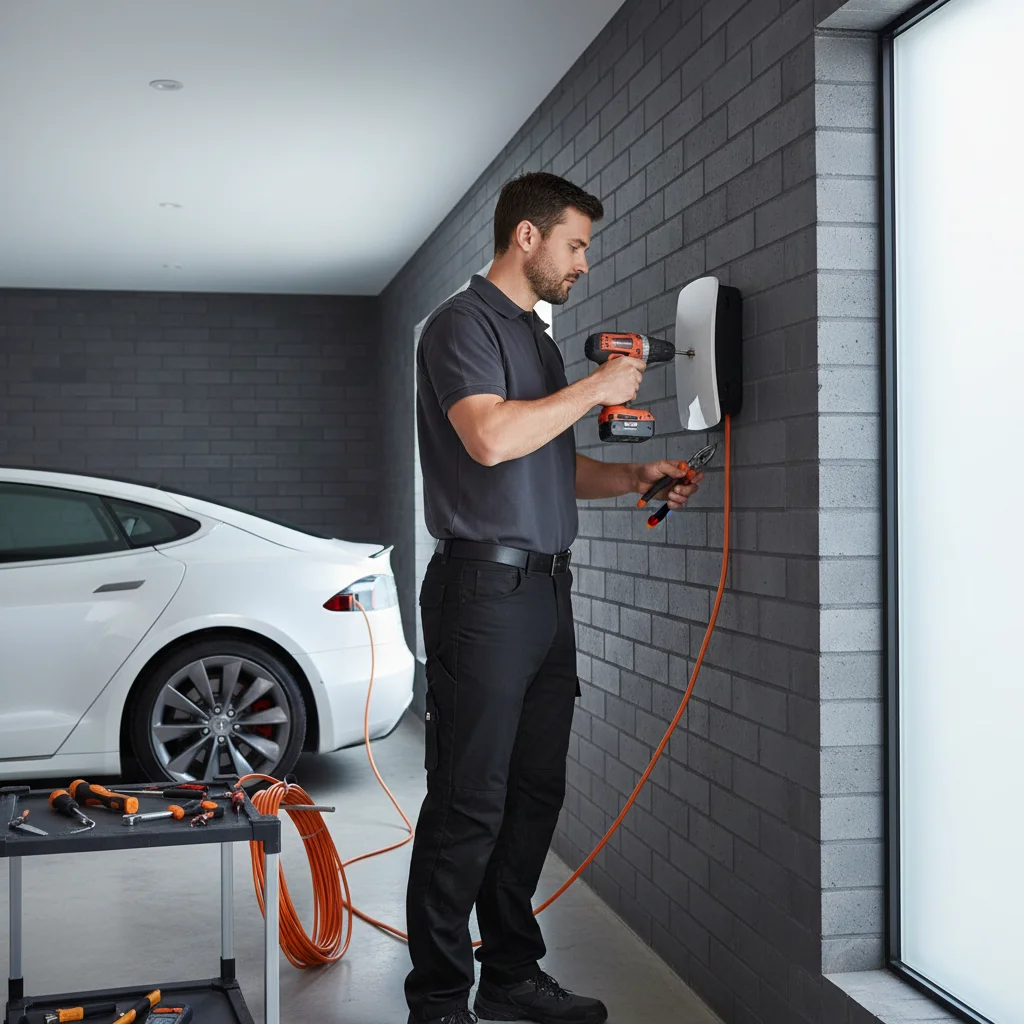
Start with the 12V, not the hook
The Model X is a large SUV with electric rear doors. Those falcon-wing doors need 12-volt power. So do the handles, the screen, and the computers that wake the pack. When that small battery sags, the whole car looks finished. The pack can still hold miles. You just can’t reach them yet.
That mix shows up across this market. Cars sit in Ontario airport lots. They sit in Fontana warehouse rows after a long shift. They sit in sun on I-10 shoulders and I-215 ramps. Sentry mode keeps sipping 12V while you’re gone. Inland heat cooks the frunk, and the 12V lives up there.
If the screen still lights and says you can’t drive, that’s a pack problem. Jumping the 12V won’t add range. You need a charge. If the screen is black and the app is dark, treat it as 12V. Our guide to a dead pack versus a dead 12V walks through both.
How a Model X tells you the 12V is going
Most Tesla no-start writeups start with the Model 3 and Model Y. The X has its own tells, and they matter when you’re already stranded.
The rear falcon-wing doors use electric struts. Those struts need 12V. Owners often notice the rear doors first. Handles stay flush. The wings won’t rise. Front doors may still work for a while. Then the screen goes black. Then the phone key does nothing. Don’t wait for a black screen. Quiet falcon-wings are the early clue.
The battery itself sits in the front trunk, passenger side. You’ll see a red positive cap once the lid is up. Getting that lid open with no power is the hard part. The Model X frunk is motorized and heavy. There’s no light finger-pull like some smaller Teslas.
Cars built through 2022 generally use an AGM lead-acid 12V. Later Model X vehicles moved to a lithium 12V. The lithium pack can drop with less warning. It can also come back after a jump and hold long enough to reach a plug. The older AGM pack sags, then dies again if you don’t charge. Either way, the jump points live in the same frunk.
Where Inland Empire Model X owners get stuck
This isn’t a cool coastal climate. Riverside County and San Bernardino County bake parked cars. The frunk is a metal box in that sun. A weak 12V that still worked in the garage can fail after a few hours on a hot lot.
Airport rows and warehouse shifts. Ontario’s airport lots and the warehouse grid around Ontario and Fontana are long-sit country. Sentry mode plus days away will drain a marginal 12V. Turn Sentry off before a flight or a long warehouse shift. If you already came back to a brick, start with the 12V checks above. Then see our note on Ontario airport lots and warehouse EV rescue.
Freeway heat, grades, and a black screen. I-10 through Colton and Redlands puts a Model X in sun and stop-and-go. So does I-215 through Moreno Valley and Perris. I-15 toward the Cajon climb does it on a grade. SR-60 through Jurupa Valley and SR-91 through Corona add more hot shoulders. A Model X that won’t wake there is often 12V, not empty miles. Confirm on the screen if you can get one. “Unable to drive, plug in” is a pack story. A dark cabin with flush handles is a 12V story.
Mountain lots and a different home utility. Lake Arrowhead, Crestline, Running Springs, and Big Bear Lake are real Model X weekend drives. The 12V can fail in a mountain lot just like a valley lot. Home power on Big Bear Lake and Big Bear City is Bear Valley Electric Service, not Southern California Edison. That doesn’t change the roadside 12V. It does change whose outage knocked out a house charger before you left. Lake Arrowhead and Crestline sit on SCE’s tariff list. Don’t mix those two maps if you’re explaining a dark wall connector.
Older streets, split utilities, and a car that sat. A lot of housing in San Bernardino County predates 1980. ACS 2019-2023 puts that share at 43.8%. Riverside County is 30.2% on the same vintage. Older panels and a dark Level 2 don’t invent a 12V failure. A sit plus inland heat is how a weak 12V finally quits.
Wall power isn’t the same in every city. Riverside homes are on Riverside Public Utilities. Colton owns its electric system inside city limits. Banning has a city electric utility. Most other valley cities are on SCE. Moreno Valley is split with Moreno Valley Utility. Rancho Cucamonga is mostly SCE, with a Rancho Cucamonga Municipal Utility pocket in the southeast. None of that sets a rescue price.
Victorville is easy to misread. SCE serves houses there. The city’s municipal utility is for the Southern California Logistics Airport and Foxborough Industrial Park, not homes. If a Victorville Model X sat through a dark garage, that’s an SCE outage question.
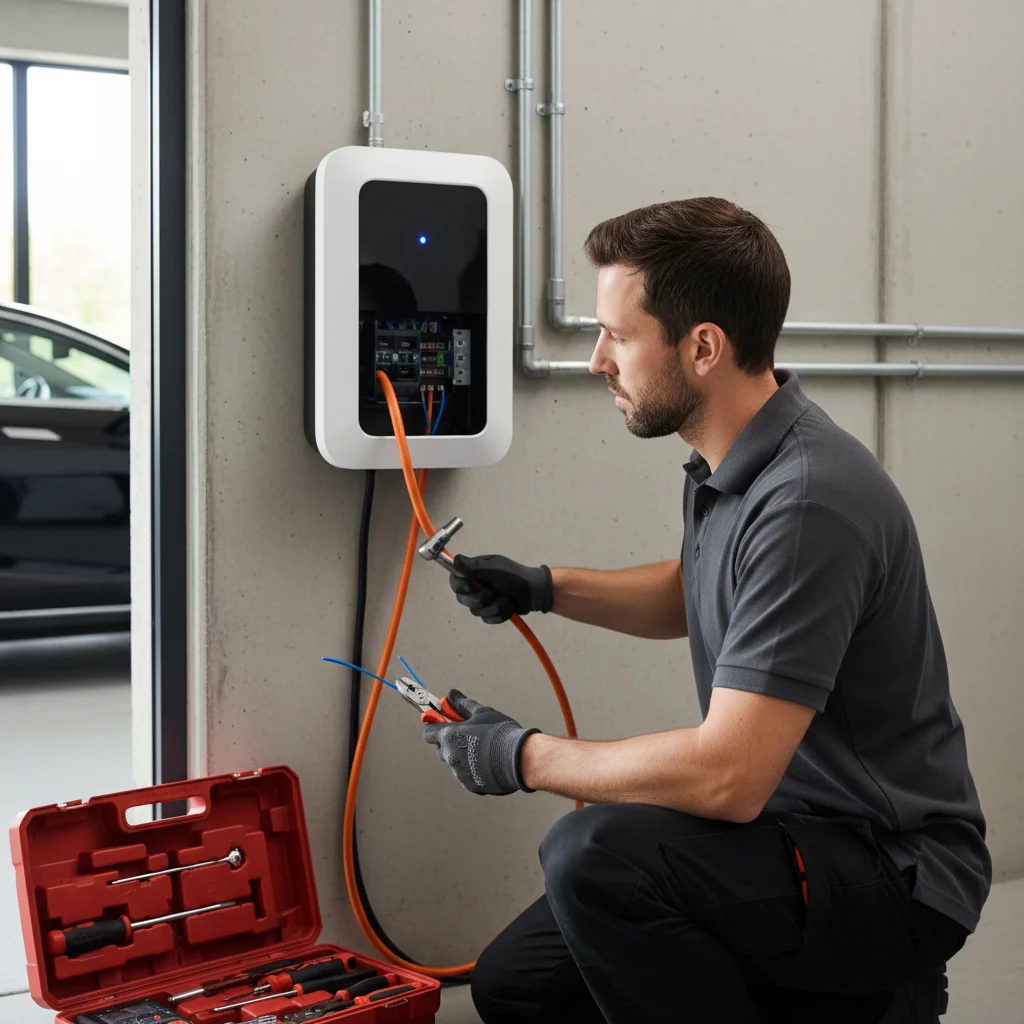
Open the frunk with no power
Tesla’s manual path is outside the car.
- Find the small tow-eye cover on the driver’s side of the front bumper.
- Pop it with a finger or a flat tool.
- Reach in for the loop or plastic pull. That’s the manual frunk release.
- Pull once. You should hear the latch click. The lid stays down.
- At the front, press the lid down slightly, then lift from the center gap. Use both hands.
- Look to the passenger side of the frunk. The 12V is there, under the red positive cover.
Don’t yank the fascia. The cable is meant to be pulled from that hole. The lid is heavy enough that you want a second person if you have one.
Jump the 12V the Tesla way
Tesla’s steps call for a portable lithium jump pack on those frunk terminals. Don’t clip a running gas car onto a Model X 12V. The low-voltage bus isn’t built for that kind of dump.
| Model X years | 12V type | Where you clip |
|---|---|---|
| 2015 to 2022 | AGM lead-acid | Frunk, red positive cap |
| 2023 and newer | Lithium 12V | Same frunk terminal |
Ground the negative clamp on clean, unpainted metal on the frunk rail. You don’t need the battery’s own negative post.
Then:
- Connect the pack and give it about a minute.
- Try a door handle. Wait for the screen.
- In the car, open Controls, then Service, then 12V Battery if that menu is there.
- Plug in as soon as you can. The DC-DC converter needs a live pack and a charge session to refill the 12V.
Clamp order lives in our Model 3, Y, S, and X jump guide.
If you’d rather not crawl a bumper on I-10, the operators we connect you with can jump a Tesla 12V on site. They quote you before they start.
After a jump, drive to a plug. A Supercharger works. So does a home Level 2. Let the car recharge the 12V through its own converter. If the car wakes and then dies again in the next lot, the 12V is likely worn out. We don’t publish a year figure for that. Tesla service sets replacement.
When it’s the pack, not the 12V
A live screen that says plug in isn’t a 12V story. The falcon-wings may still work. The car simply won’t go. That’s an empty traction pack. A jump won’t invent miles. You need energy in the pack.
Operators in this network bring a 240V Level 2 source to the car. Native NACS for Tesla. Typical add is 10 to 20 miles of range in 15 to 30 minutes of charging. That’s charge time on the cable. It isn’t a promise of when someone arrives. It’s often enough to reach a Supercharger or home, if the car will accept charge.
See out-of-charge recovery when the screen is on and the miles are gone. You can still need both on one stop. A dead 12V can hide an empty pack until the screen returns. Wake the car, then read the range before you drive into the Cajon or up toward Yucaipa.
Quick checks before you call anyone
Not every dark Model X is a battery.
PIN to Drive can look like a no-start. A live screen with a keypad wants your PIN. That’s not 12V. Enter it, or reset it from the Tesla app on another phone.
Valet mode can make the car feel broken. Odd speed limits and a live screen point at the driver profile, not the frunk.
A stuck firmware bar can freeze the display. Hold both scroll wheels for about ten seconds for a soft reboot. If a progress bar is still there after that, you’re in an update, not a 12V brick.
If the app still shows climate and Sentry, the 12V isn’t fully dead. Look at range and messages next. Black screen, flush handles, app offline: 12V until proven otherwise.
For the wider Tesla no-start list, use the seven-step Tesla checklist.
Jump, 240V charge, or tow
Tow last on a Model X when you can. A dead 12V often needs a jump and a plug. An empty pack needs charge. A tow is for a car that still won’t move after power is back. It’s also for a spot where you can’t charge in place. We’re not going to invent a nearest-plug distance. You can see stalls in the Tesla app and in the usual maps.
Charge Pro IE is a referral line. We match stranded EV drivers with independent local mobile rescue operators. We don’t hold a contractor license. We don’t own trucks or a yard. We don’t employ technicians. We don’t promise an arrival window. The operator quotes before work starts and bills you directly.
Those operators can jump or replace a dead 12V on site. They can bring 240V Level 2 to a Tesla or another EV. They handle Tesla and every major EV brand.
We serve the Inland Empire. The Inland Empire charging and rescue hub lists the city pages.
If you’re stranded now, call (909) 250-2881. Tell them it’s a Model X that won’t start. Say whether the screen is black. Say whether falcon-wings still move. That’s enough to start the match.
Frequently asked questions
Where is the 12V battery on a Tesla Model X?
It’s in the front trunk, on the passenger side. With no power, use the manual release behind the driver’s-side tow-eye cover. Pull once, then lift the lid by hand. The red positive cap marks the jump point.
Can you jump a Model X from another car?
Tesla’s published path is a portable jump pack on the frunk terminals. Skip jumper cables from a running engine. Ground to bare metal on the frunk rail. After the screen wakes, plug the car in so the 12V can recharge through the car’s converter.
How do I tell a dead 12V from an empty pack on a Model X?
A dead 12V blacks the screen, hides the handles, and takes the app offline. Rear falcon-wing doors often fail first. An empty pack still lets the screen talk. It’ll tell you to plug in. If you can tap the display, the 12V is doing its job.