Your Kia Niro EV just finished school pickup in Eastvale. Then it sat through a grocery stop. Now the start button does nothing.
That dark dash is usually the 12-volt battery. It’s not an empty traction pack. The pack can still hold a useful charge. The small battery that wakes the computers is the one that quit.
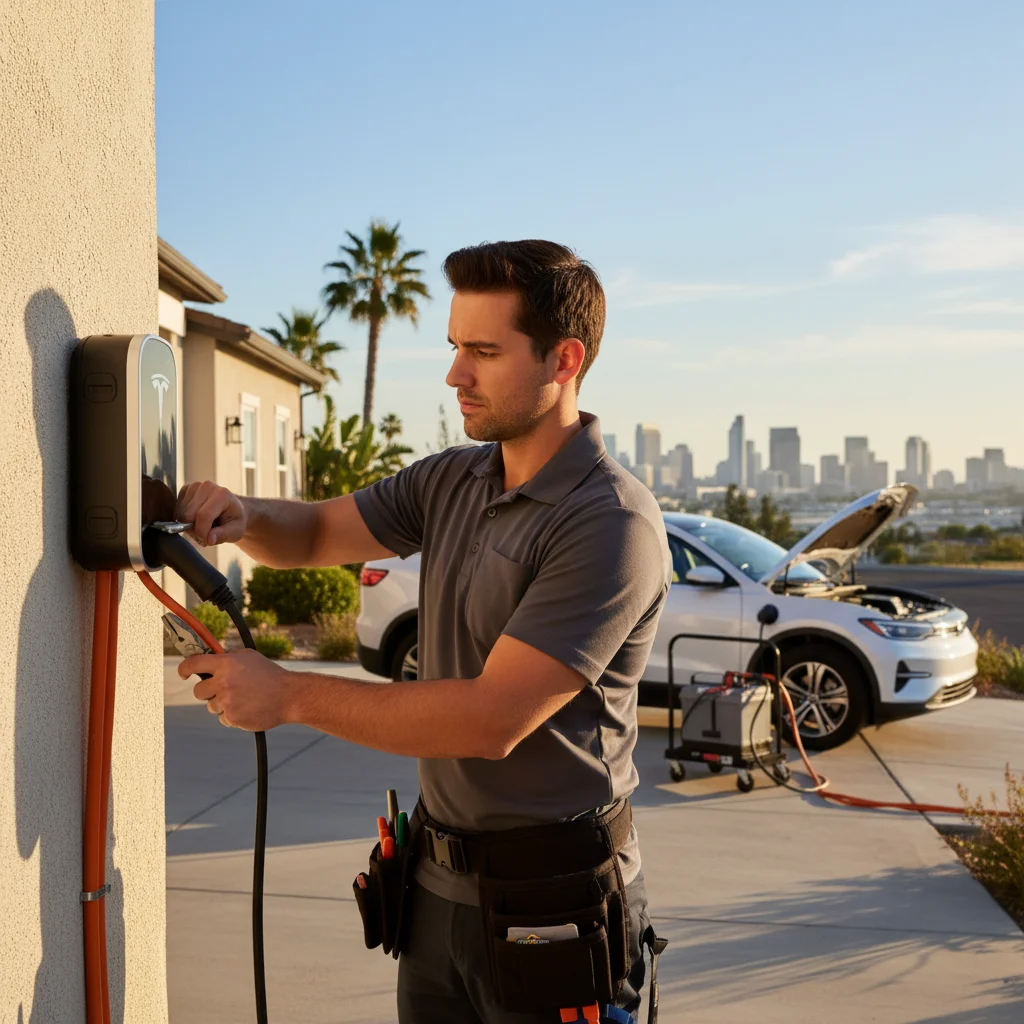
School runs and grocery stops drain the 12-volt first
The 2019 through 2022 Niro EV uses a split-battery layout. The redesigned 2023 and later model keeps that same setup. A large lithium-ion pack moves the wheels. A small 12-volt battery runs the locks and the screens. It also runs the alarm and the wake relay.
Kill that small battery and the car acts fully dead. A healthy traction pack won’t help you. The computers never get the message to close the contactors.
Inland Empire weeks make that failure easy to miss. You’re not logging a long highway day. You’re doing pickup in Eastvale. Then a pass through Ontario retail lots. Maybe a warehouse gate in Fontana. Each trip is short. The DC-DC converter barely runs. Then the car sits.
Eastvale’s housing is new. ACS 2019 to 2023 figures put pre-1980 homes at 2.2 percent. That means school-run miles and short hops, not long rural drives. French Valley sits in the same pattern, with pre-1980 housing at 2.3 percent. Rancho Cucamonga shoppers around Victoria Gardens see it too. The car looks fine when you park. It looks dead when you come back.
A dead 12-volt has a tell. The cluster stays black. There’s no chime. Ready never appears. The fob may not unlock the doors. That sequence is what a dead EV 12-volt looks like. It shows up on almost every brand, the Niro EV included.
Dark dash or turtle warning: pick the right problem
These two failures feel similar from the seat. They’re different jobs.
Treat it as a 12-volt failure when the cluster stays black. The start button is mute. Hazards won’t light. Locks are slow or silent. A car that sat after errands, a shift, or a weekend fits that list.
Treat it as a depleted pack when the dash still wakes. You’ll see a low-battery or turtle warning. Locks and screens still work. The car drove normally until range ran out.
If the dash is dead, jump or replace the 12-volt first. If the dash is talking and asking for a charge, the pack needs energy. Non-Tesla EV rescue is how Charge Pro IE connects you with an independent operator. That operator can bring a 240-volt Level 2 source to a CCS port. Operators typically add 10 to 20 miles of range in 15 to 30 minutes of charging. That window is charging time. It’s not an arrival time.
The operator quotes you before work starts and bills you directly. Charge Pro IE doesn’t set that price. It holds no trucks and performs no work.
Where these stalls show up inland
Ontario mixes airport parking, warehouse rows, and in-town lots. About 50.7 percent of Ontario housing predates 1980, per the same ACS vintage. A Niro EV that sat through a shift is a common 12-volt stall. The Ontario airport and warehouse lot pattern is the same story. The car slept, then it wouldn’t wake.
Riverside isn’t on Southern California Edison for city power. Riverside Public Utilities has served the city since 1895. That split matters if you’re debugging a home charger. It doesn’t change the battery in the Niro EV. A dark car in a Riverside garage still starts with the 12-volt.
San Bernardino housing is older still. ACS 2019 to 2023 puts pre-1980 units at 60.9 percent. People there often blame a driveway charger when the Niro EV won’t wake at dawn. Check the 12-volt before you blame the panel.
Colton runs its own electric utility inside city limits. Banning does too. Moreno Valley is split. Southern California Edison serves much of the city. Moreno Valley Utility covers newer tracts. None of those facts diagnose your no-start. They do stop you from blaming the wall unit when the dash never woke.
Freeway shoulders are a worse place to sort this out. Hazards go on first. Roll to a safe spot if it still moves. Then call. I-10 through Colton and Redlands is one common stall. I-215 through Moreno Valley is another. So are SR-60 in Jurupa Valley and the 91 through Corona. Don’t stand in a travel lane to inspect terminals.
Temecula and Murrieta look like Eastvale on paper. Pre-1980 housing is 6.5 percent in Temecula. It’s 6.2 percent in Murrieta, ACS 2019 to 2023. Short school and errand cycles are the week. A Niro EV that fails in a stall after those loops is still the small battery. Prove the pack is empty before you chase a charge.
Chino work lots and Fontana warehouse gates add more start-and-sit days. Corona stacks the 91 commute on top of grocery runs. That’s more short cycles on a small 12-volt.
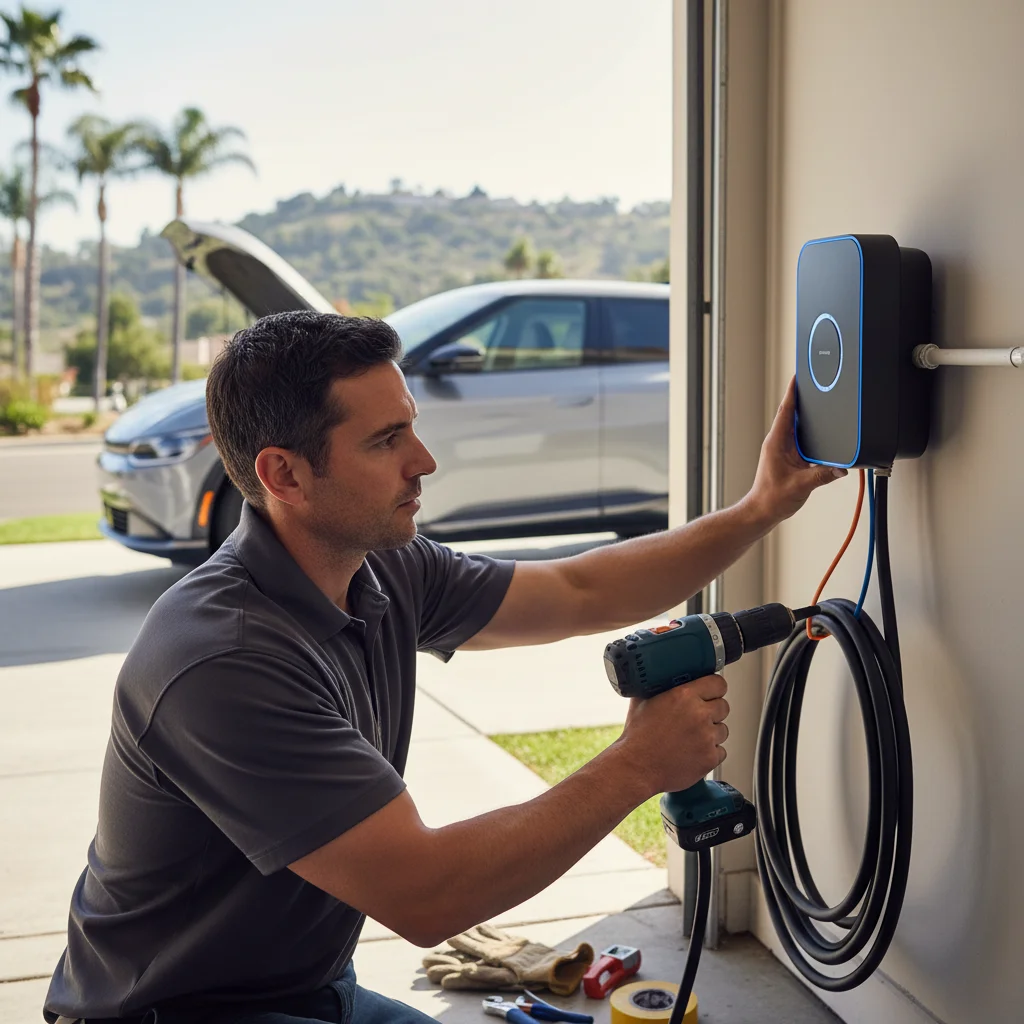
What to check at the curb
Try the fob first. A dead coin cell can block entry. Many Niro EV fobs hide a mechanical key. Get the doors open before you decide the car is dead.
Then open the hood. The 12-volt sits on the driver’s side near the firewall, under a plastic cover. That location holds on the older Niro EV and the 2023 and later redesign.
Look at the terminals. White crust or a loose clamp can kill a start. That can happen even when the battery isn’t fully dead. Clean and snug them if you can do it safely.
Don’t clip jumper cables onto those battery posts. Kia gives you dedicated jump posts in the bay. A red cover marks the positive. An unpainted chassis point is the ground. Those are the safe clips.
Use a standard portable 12-volt jumper. Skip a heavy diesel booster. The Niro EV’s 12-volt is a small auxiliary pack.
The cable order is the same idea as our curbside EV jump guide.
Using the Niro EV jump posts
Park so the leads reach the bay. Open the red positive cover. Clip red there. Clip the other red lead to the donor positive or the jumper positive. Clip black to the donor negative or the jumper negative. Clip the last black lead to unpainted metal on the Niro EV. Don’t use the battery negative.
Wait a couple of minutes. Press start. If the cluster wakes and Ready comes up, remove cables in reverse. Negative first, then positive.
Drive somewhere real. The DC-DC converter recharges the 12-volt only while the car is on. A loop around the stall isn’t a charge. If Ready never comes, stop. More jumps won’t clear a module fault.
Battery Save on the 2023 and later Niro EV
Newer Niro EVs include a 12-volt Battery Save toggle. Open Settings, then Vehicle, then 12V Battery Save, and turn it on.
The setting tells the car to keep the 12-volt topped up more firmly. It does that while the pack is charging or while you’re plugged in. It won’t rescue a battery that already failed. It can slow a drain if the car sits between school weeks.
If Battery Save is already on, the 12-volt may still die within days. Plan on a replacement. Or have a shop hunt a sleep draw. That’s not a parking-lot guess.
The same 12-volt trap shows up on the Kia EV9. Different body, same split-battery logic.
When a jump isn’t the whole fix
A dash that returns isn’t a diagnosis.
Corroded terminals can drop you again at the next grocery stop. A car that sat for weeks may wake once, then act normal. If the 12-volt dies again after a jump, treat the battery as failing. Or look for a parasitic draw.
If the 12-volt tests fine, Ready may still never engage. That can be a high-voltage interlock fault. That needs a scan tool. It’s shop work, not a roadside jump.
If the pack is actually empty
Sometimes you did burn the traction battery down. A living dash is the first tell. You’ll see a charge warning. The car drove until it slowed.
Then you need energy in the pack. Charge Pro IE is a referral line. It matches stranded EV drivers with independent local operators. Those operators can jump a 12-volt on site, or replace it. They can also bring a 240-volt Level 2 source with a CCS or J1772 adapter. Charge Pro IE owns no trucks and employs no technicians.
Eastvale is one of the cities in that Inland Empire service area. The operator who takes the job quotes you first.
Frequently asked questions
Can a Kia Niro EV sit dead with a charged pack?
Yes. The 12-volt battery powers the modules that wake the traction pack. If that small battery is down, the start button does nothing. The charge port may not talk to a cable either. A jump at the under-hood posts is the first move. Charging the big pack won’t help until the computers wake.
Where do you clip jumper cables on a Niro EV?
Use the dedicated posts in the engine bay, not the 12-volt terminals. Clip the red lead to the positive post under the red cover. Clip the black lead to unpainted chassis metal. Wait a couple of minutes, then press start. If Ready appears, pull the cables in reverse and drive so the DC-DC converter can refill the 12-volt.
What if it starts, then dies after the next errand?
That usually means the 12-volt can’t hold a charge, or something is drawing current in sleep. Clean the terminals. Confirm Battery Save is on if you have a 2023 or later Niro EV. Then get the battery tested. Repeated jumps at every grocery stop won’t fix a failing cell.
If those checks still leave you stuck, call Charge Pro IE at (909) 250-2881. Leave your location and that you drive a Kia Niro EV. The operator who takes the job quotes you before starting and sets their own timing.